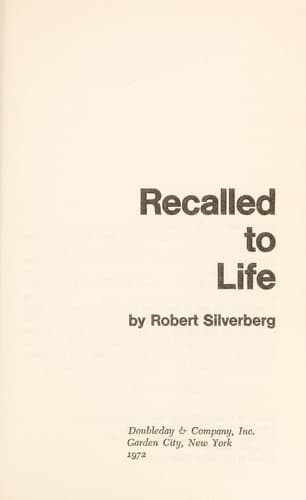
Death -- Fiction; Immortalism -- Fiction; Science fiction
Raymond shook his head. "On the contrary. We've merely repeated work
that was first carried out more than eighty years ago. These techniques
are far from new. But our application of them to--"
"Yes," Harker said weakly. "To _human_ life. That's--that's the
clincher, I'd say."
Harker realized that Raymond was staring at him coldly, appraisingly,
as if trying to read his mind before proceeding to the next
demonstration. Harker felt his face reddening under the scrutiny.
"We're lucky enough to be able to--ah--_clinch_ things," Raymond said.
"With a human being?"
Raymond nodded. "You understand that getting human specimens for
research has been our gravest problem. I'll have to ask you not to
voice any of the questions that may arise in your mind now."
Harker nodded. He could recognize a security blanket when it was
lowered.
Raymond turned and said in a mortuary voice, "Bring in Mr. Doe."
Two attendants entered, carrying a sheet-shrouded form on a stretcher.
They deposited the figure on the vacant lab table that had held the
second dog. Harker saw that it was a man, in his late sixties, bald,
dead.
"Mr. Doe has been dead for eleven hours and thirteen minutes," Raymond
said. "He died of syncope during an abdominal operation. Would you care
to examine the body?"
"I'll accept the evidence on faith, thanks."
"As you will. Dr. Vogel, you can begin."
While Vogel worked over the cadaver, Raymond went on, "The process is
essentially compounded out of techniques used for decades with varying
success--that is, a combination of pulmotor respiration, artificial
heart massage, hormone injection, and electrochemical stimulation. The
last two are the keys to the process: you can massage a heart for days
and keep it pumping blood, but that isn't restoration of life."
"Not unless the heart can continue on its own when you remove the
artificial stimulus?"
"Exactly. We've done careful hormone research here, with some of the
best men in the nation. A hormone, you know, is a kind of chemical
messenger. We've synthesized the hormones that tell the body it's
alive. Of course, the electrochemical stimulation is important: the
brain's activity is essentially electrical in nature, you know. And so
we devised techniques which--"
"Ready, Dr. Raymond."
Harker compelled himself to watch. Needles plunged into the dead
man's skin; electrodes fastened to the scalp discharged suddenly. It
was weird, vaguely terrifying, laden with burdensome implications
for the future. All that seemed missing was the eery blue glow that
characterized the evil experiments of stereotyped mad scientists.
Public-domain text, read in full here on John Shaqi.
Reviews
Reviews
No reviews yet
Be the first to share your thoughts on this work.
Join the Discussion
Join the discussion
Sign in to leave a comment or review.
Sign InorCreate an account