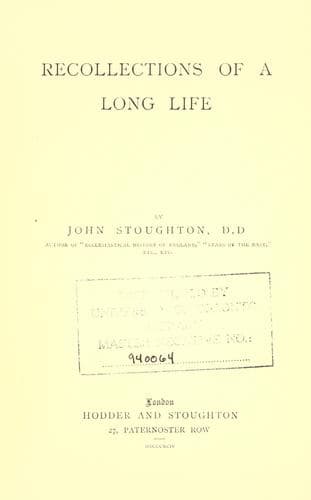
Clergy -- England -- Biography; Stoughton, John, 1807-1897
Congregationalists, and in tours on behalf of the London Missionary
Society, I was received hospitably in their homes, and had gratifying
opportunities of witnessing their beautiful Christian life.
Joseph John Gurney, of Earlham, felt seriously concerned respecting the
American defection, in a community to which he had been attached from
childhood. He had studied in the University of Oxford, had cultivated
friendships in other denominations, was a good classic and Biblical
scholar, and also an author of theological works. Mr. Gurney was
“concerned” about the effect of Hicksite opinion on American and English
Friends, and therefore took up his pen and wrote in reply to the leader
who had done so much mischief.
Mr. Gurney, like his sister Mrs. Fry, undertook journeys for preaching
the Gospel, and once he visited Windsor for that purpose. I was unwell
at the time, but he called and talked by my bedside, and commended me to
God in prayer. Several Quaker families at that period were living at
Staines and Uxbridge; with them I had much intercourse, especially when
we were joined in the advocacy of Slave Emancipation. The community, in
both towns now named, was considerable for numbers and for wealth.
Friends now dress, speak and act much like other people. Conforming to
common custom, they still eschew all extravagances of fashion. They no
longer forfeit membership by “marrying out of Society.” “The Right
Honourable John Bright” (how shocked George Fox would have been at the
title!) told me once, that relaxation in strictness as to unimportant
points, had checked a decline in numbers going on before.
V. Methodism, of course, brings to my mind a long train of early
associations. Not merely names, but living forms, of noted preachers
belonging to the second decade of this century come back to my
recollection.
Calvert Street Chapel was opened about 1812, and Dr. Coke preached.
I cannot say that I remember his sermon; but, as noticed already, I
distinctly recollect seeing the odd-looking, diminutive man, standing on
a table talking in the committee room of Bethel Hospital {377} adorned by
paintings of foundress and governors. Dr. Coke energetically addressed
on the occasion a number of people, who had been invited by my
grandfather, to hear the noted advocate of Methodist missions. Many
years afterwards I mentioned the circumstance to a gentleman, who at the
time took care of the patients, when he fetched an old committee book, in
which this gathering was noticed, with a minute expressing the
displeasure of the Governors at such a liberty being taken, and
forbidding anything of the kind in future. The Wesleyan congregations in
Norwich were then very large, and _local_ preachers—uncultivated men in
humble life—frequently occupied the pulpit in the afternoon service at
Calvert Street, and, remember, delivered animated discourses likely to do
their hearers good.
Public-domain text, read in full here on John Shaqi.
Reviews
Reviews
No reviews yet
Be the first to share your thoughts on this work.
Elsewhere in the archive
Join the Discussion
Join the discussion
Sign in to leave a comment or review.
Sign InorCreate an account