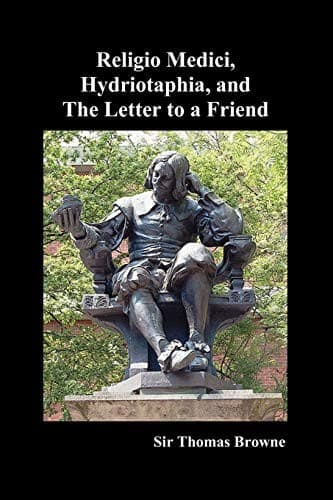
Religio Medici, Hydriotaphia, and the Letter to a FriendBrowne, Thomas, Sir
Religion
Religio Medici, Hydriotaphia, and the Letter to a Friend
Browne, Thomas, Sir
Christian ethics; Christian life; Essays; Funeral rites and ceremonies; Medical ethics; Medicine -- History; Religion and medicine
In vain do individuals hope for immortality, or any patent from
oblivion, in preservations below the moon; men have been deceived even
in their flatteries, above the sun, and studied conceits to perpetuate
their names in heaven. The various cosmography of that part hath
already varied the names of contrived constellations; Nimrod is lost
in Orion, and Osyris in the Dog-star. While we look for incorruption
in the heavens, we find that they are but like the earth;--durable in
their main bodies, alterable in their parts; whereof, beside comets and
new stars, perspectives begin to tell tales, and the spots that wander
about the sun, with Phaeton’s favour, would make clear conviction.
There is nothing strictly immortal, but immortality. Whatever hath no
beginning, may be confident of no end;--all others have a dependent
being and within the reach of destruction;--which is the peculiar of
that necessary essence that cannot destroy itself;--and the highest
strain of omnipotency, to be so powerfully constituted as not to
suffer even from the power of itself. But the sufficiency of Christian
immortality frustrates all earthly glory, and the quality of either
state after death, makes a folly of posthumous memory. God who can
only destroy our souls, and hath assured our resurrection, either
of our bodies or names hath directly promised no duration. Wherein
there is so much of chance, that the boldest expectants have found
unhappy frustration; and to hold long subsistence, seems but a scape
in oblivion. But man is a noble animal, splendid in ashes, and pompous
in the grave, solemnizing nativities and deaths with equal lustre, nor
omitting ceremonies of bravery in the infamy of his nature.
Life is a pure flame, and we live by an invisible sun within us. A
small fire sufficeth for life, great flames seemed too little after
death, while men vainly affected precious pyres, and to burn like
Sardanapalus; but the wisdom of funeral laws found the folly of
prodigal blazes and reduced undoing fires unto the rule of sober
obsequies, wherein few could be so mean as not to provide wood, pitch,
a mourner, and an urn.
Public-domain text, read in full here on John Shaqi.
Reviews
Reviews
No reviews yet
Be the first to share your thoughts on this work.
Elsewhere in the archive
Join the Discussion
Join the discussion
Sign in to leave a comment or review.
Sign InorCreate an account