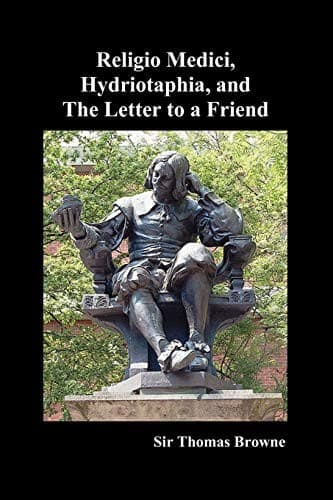
Religio Medici, Hydriotaphia, and the Letter to a FriendBrowne, Thomas, Sir
Religion
Religio Medici, Hydriotaphia, and the Letter to a Friend
Browne, Thomas, Sir
Christian ethics; Christian life; Essays; Funeral rites and ceremonies; Medical ethics; Medicine -- History; Religion and medicine
Be charitable before wealth make thee covetous, and lose not the glory
of the mitre. If riches increase, let thy mind hold pace with them, and
think it is not enough to be liberal but munificent. Though a cup of
cold water from some hand may not be without its reward, yet stick not
thou for wine and oil for the wounds of the distressed, and treat the
poor as our Saviour did the multitude to the reliques of some baskets.
Trust not unto the omnipotency of gold, or say not unto it, thou art
my confidence. Kiss not thy hand when thou beholdest that terrestrial
sun, nor bore thy ear unto its servitude. A slave unto Mammon makes
no servant unto God. Covetousness cracks the sinews of faith, numbs
the apprehension of anything above sense; and only affected with the
certainty of things present, makes a peradventure of things to come;
lives but unto one world, nor hopes but fears another: makes their own
death sweet unto others, bitter unto themselves, brings formal sadness,
scenical mourning, and no wet eyes at the grave.
If avarice be thy vice, yet make it not thy punishment. Miserable men
commiserate not themselves, bowelless unto themselves, and merciless
unto their own bowels. Let the fruition of things bless the possession
of them, and take no satisfaction in dying but living rich. For since
thy good works, not thy goods will follow thee; since riches are an
appurtenance of life, and no dead man is rich, to famish in plenty, and
live poorly to die rich, were a multiplying improvement in madness and
use upon use in folly.
Persons lightly dipt, not grained, in generous honesty are but pale in
goodness and faint-hued in sincerity. But be thou what thou virtuously
art, and let not the ocean wash away thy tincture. Stand majestically
upon that axis where prudent simplicity hath fixed thee; and at no
temptation invert the poles of thy honesty that vice may be uneasy and
even monstrous unto thee; let iterated good acts and long confirmed
habits make virtue natural or a second nature in thee; and since few or
none prove eminently virtuous but from some advantageous foundations
in their temper and natural inclinations, study thyself betimes, and
early find what nature bids thee to be or tells thee what thou mayest
be. They who thus timely descend into themselves, cultivating the good
seeds which nature hath set in them, and improving their prevalent
inclinations to perfection, become not shrubs but cedars in their
generation. And to be in the form of the best of bad, or the worst of
the good, will be no satisfaction unto them.
Let not the law of thy country be the _non ultra_ of thy honesty, nor
think that always good enough that the law will make good. Narrow not
the law of charity, equity, mercy. Join gospel righteousness with legal
right. Be not a mere Gamaliel in the faith, but let the Sermon on the
Mount be thy Targum unto the law of Sinai.
Public-domain text, read in full here on John Shaqi.
Reviews
Reviews
No reviews yet
Be the first to share your thoughts on this work.
Elsewhere in the archive
Join the Discussion
Join the discussion
Sign in to leave a comment or review.
Sign InorCreate an account