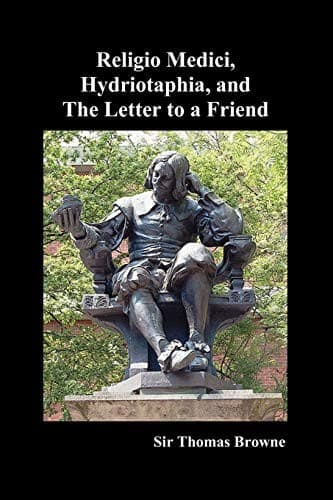
Religio Medici, Hydriotaphia, and the Letter to a FriendBrowne, Thomas, Sir
Religion
Religio Medici, Hydriotaphia, and the Letter to a Friend
Browne, Thomas, Sir
Christian ethics; Christian life; Essays; Funeral rites and ceremonies; Medical ethics; Medicine -- History; Religion and medicine
Make not the consequences of virtue the ends thereof. Be not beneficent
for a name or cymbal of applause; nor exact and punctual in commerce
for the advantages of trust and credit, which attend the reputation of
just and true dealing: for such rewards, though unsought for, plain
virtue will bring with her, whom all men honour, though they pursue
not. To have other by-ends in good actions sours laudable performances,
which must have deeper roots, motives, and instigations, to give them
the stamp of virtues.
Though human infirmity may betray thy heedless days into the popular
ways of extravagancy, yet, let not thine own depravity or the torrent
of vicious times carry thee into desperate enormities in opinions,
manners, or actions. If thou hast dipped thy foot in the river, yet
venture not over Rubicon; run not into extremities from whence there
is no regression, nor be ever so closely shut up within the holds
of vice and iniquity, as not to find some escape by a postern of
recipiscency.[126]
Owe not thy humility unto humiliation by adversity, but look humbly
down in that state when others look upward upon thee. Be patient in the
age of pride, and days of will, and impatiency, when men live but by
intervals of reason, under the sovereignty of humour and passion, when
it is in the power of every one to transform thee out of thyself, and
put thee into short madness.[DH] If you cannot imitate Job, yet come
not short of Socrates, and those patient Pagans, who tired the tongues
of their enemies, while they perceived they spit their malice at brazen
walls and statues.
[DH] Iræ furor brevis est.
Let age, not envy, draw wrinkles on thy cheeks; be content to be
envied, but envy not. Emulation may be plausible, and indignation
allowable, but admit no treaty with that passion which no circumstance
can make good. A displacency at the good of others, because they enjoy
it although we do not want it, is an absurd depravity sticking fast
unto nature, from its primitive corruption, which he that can well
subdue were a Christian of the first magnitude, and for ought I know
may have one foot already in heaven.
Public-domain text, read in full here on John Shaqi.
Reviews
Reviews
No reviews yet
Be the first to share your thoughts on this work.
Elsewhere in the archive
Join the Discussion
Join the discussion
Sign in to leave a comment or review.
Sign InorCreate an account