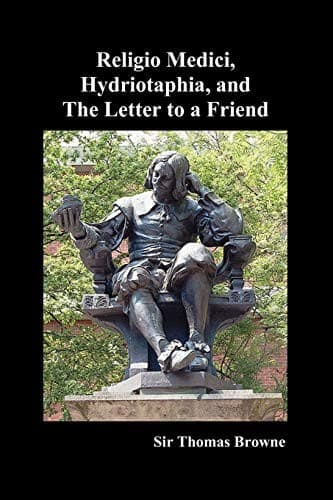
Religio Medici, Hydriotaphia, and the Letter to a FriendBrowne, Thomas, Sir
Religion
Religio Medici, Hydriotaphia, and the Letter to a Friend
Browne, Thomas, Sir
Christian ethics; Christian life; Essays; Funeral rites and ceremonies; Medical ethics; Medicine -- History; Religion and medicine
In sundry graves and sepulchres we meet with rings, coins, and
chalices. Ancient frugality was so severe, that they allowed no gold
to attend the corpse, but only that which served to fasten their
teeth. Whether the Opaline stone in this were burnt upon the finger of
the dead, or cast into the fire by some affectionate friend, it will
consist with either custom. But other incinerable substances were found
so fresh, that they could feel no singe from fire. These, upon view,
were judged to be wood; but, sinking in water, and tried by the fire,
we found them to be bone or ivory. In their hardness and yellow colour
they most resembled box, which, in old expressions, found the epithet
of eternal, and perhaps in such conservatories might have passed
uncorrupted.
That bay leaves were found green in the tomb of S. Humbert, after an
hundred and fifty years, was looked upon as miraculous. Remarkable it
was unto old spectators, that the cypress of the temple of Diana lasted
so many hundred years. The wood of the ark, and olive-rod of Aaron,
were older at the captivity; but the cypress of the ark of Noah was
the greatest vegetable of antiquity, if Josephus were not deceived by
some fragments of it in his days: to omit the moor logs and fir trees
found underground in many parts of England; the undated ruins of winds,
floods, or earthquakes, and which in Flanders still show from what
quarter they fell, as generally lying in a north-east position.
But though we found not these pieces to be wood, according to first
apprehensions, yet we missed not altogether of some woody substance;
for the bones were not so clearly picked but some coals were found
amongst them; a way to make wood perpetual, and a fit associate for
metal, whereon was laid the foundation of the great Ephesian temple,
and which were made the lasting tests of old boundaries and landmarks.
Whilst we look on these, we admire not observations of coals found
fresh after four hundred years. In a long-deserted habitation even
egg-shells have been found fresh, not tending to corruption.
Public-domain text, read in full here on John Shaqi.
Reviews
Reviews
No reviews yet
Be the first to share your thoughts on this work.
Elsewhere in the archive
Join the Discussion
Join the discussion
Sign in to leave a comment or review.
Sign InorCreate an account