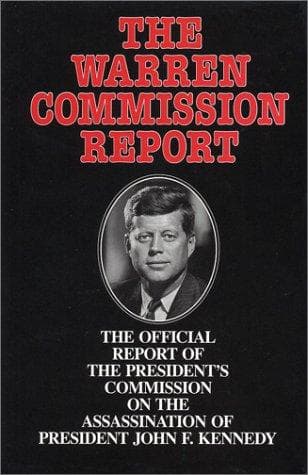
Report of the President's Commission on the Assassination of President John F. KennedyUnited States. Warren Commission
History
Report of the President's Commission on the Assassination of President John F. Kennedy
United States. Warren Commission
Kennedy, John F. (John Fitzgerald), 1917-1963 -- Assassination; Oswald, Lee Harvey
No evidence was ever presented to link Molina with Oswald except as
a fellow employee of the Texas School Book Depository. According to
Molina, he had never spoken to Oswald.[C5-246] The FBI notified the
Commission that Molina had never been the subject of an investigation
by it and that it had never given any information about Molina to
the Dallas police concerning any alleged subversive activities by
him.[C5-247] The Dallas police explained in a statement to the FBI that
they had never had a file on Molina, but that they did have one on the
American G.I. Forum.[C5-248]
Molina lost his job in December. He felt that he was being discharged
because of the unfavorable publicity he had received, but officials of
the Depository claimed that automation was the reason. Molina testified
that he had difficulty in finding another position, until finally, with
the help of a fellow church member, he secured a position at a lower
salary than his previous one.[C5-249]
If Oswald had been tried for his murders of November 22, the effects
of the news policy pursued by the Dallas authorities would have proven
harmful both to the prosecution and the defense. The misinformation
reported after the shootings might have been used by the defense to
cast doubt on the reliability of the State’s entire case. Though each
inaccuracy can be explained without great difficulty, the number
and variety of misstatements issued by the police shortly after the
assassination would have greatly assisted a skillful defense attorney
attempting to influence the attitudes of jurors.
A fundamental objection to the news policy pursued by the Dallas
police, however, is the extent to which it endangered Oswald’s
constitutional right to a trial by an impartial jury. Because of the
nature of the crime, the widespread attention which it necessarily
received, and the intense public feelings which it aroused, it would
have been a most difficult task to select an unprejudiced jury, either
in Dallas or elsewhere. But the difficulty was markedly increased
by the divulgence of the specific items of evidence with which the
police linked Oswald to the two killings. The disclosure of evidence
encouraged the public, from which a jury would ultimately be impaneled,
to prejudge the very questions that would be raised at trial.
Public-domain text, read in full here on John Shaqi.
Reviews
Reviews
No reviews yet
Be the first to share your thoughts on this work.
Elsewhere in the archive
Join the Discussion
Join the discussion
Sign in to leave a comment or review.
Sign InorCreate an account