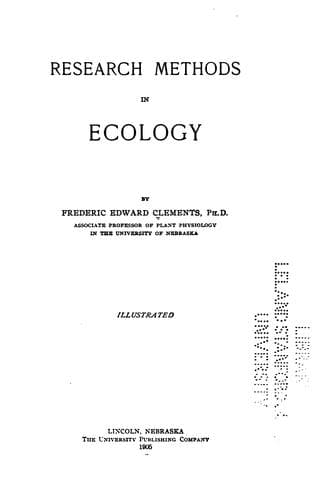
Research methods in ecologyClements, Frederic E. (Frederic Edward)
Science
Research methods in ecology
Clements, Frederic E. (Frederic Edward)
Plant ecology; Plant ecology -- Methodology
1. Spore-distributed, sporostrotes. This includes all plants possessing
structures which go by the name of spore, such as the acinetes of Nostoc
and _Protococcus_, the zoogonidia of _Ulothrix_, _Ectocarpus_, etc., the
conidia, ascospores, and basidiospores of fungi, the tetraspores of red
seaweeds, and the gemmae and spores proper of liverworts, mosses, and
ferns. These are almost always without especial contrivances for
dissemination, but their extreme minuteness results in great mobility.
2. Seed-distributed, spermatostrotes. This group comprises all flowering
plants in which the seed is the part modified or at least disseminated.
The mobility of seeds is relatively small, except in the case of minute,
winged or comate seeds.
3. Fruit-distributed, carpostrotes. The modifications of the fruit for
distribution exceed in number and variety all other modifications of
this sort. All achenes, perigynia, utricles, etc., properly belong here.
4. Offshoot-distributed, thallostrotes. To this class are referred those
plants, almost exclusively cormophytes, which produce lateral,
branch-like propagules, such as root-sprouts, rhizomes, runners,
stolons, rosettes, etc. Migration with such plants is extremely slow,
but correspondingly effective, since it is almost invariably followed by
ecesis.
5. Plant-distributed, phytostrotes. This group includes all plancton and
surface forms, whether motile or non-motile, and those terrestrial
plants in which the whole plant, or at least the aerial part, is
distributed, as in tumbleweeds and in many grasses.
Public-domain text, read in full here on John Shaqi.
Reviews
Reviews
No reviews yet
Be the first to share your thoughts on this work.
Elsewhere in the archive
Join the Discussion
Join the discussion
Sign in to leave a comment or review.
Sign InorCreate an account