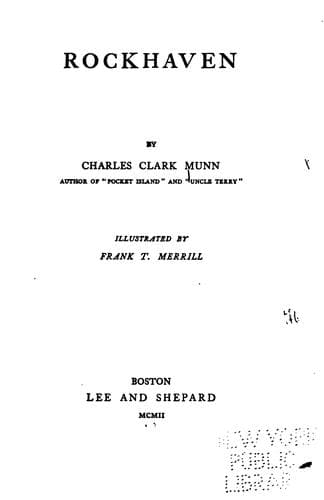
Islands -- Fiction; Love stories; New England -- Fiction; Swindlers and swindling -- Fiction
"A man may do right 'n' keep on doin' right 'most all his life long," he
said, "an' some day up pops a temptation, when he's least prepared
for't, and over he goes like a sailboat 'thout ballast in a gale o'
wind. An' then what becomes o' all yer 'lowin' the Lord's opened yer
eyes 'n' gin ye extra grace? Ye only get laughed at by the scoffers 'n'
yer influence gone fer good. Human nature's brittle stuff, an' them as
does right 'thout any change o' heart, come purty near bein' leaders in
the percession toward the Throne."
His philosophy, broad as infinite mercy and humble as a child's
happiness, permeated all his thoughts and tinged all his speeches.
"No joy's quite so comfortin' as we cac'late," he would say, "an' no
sorrer quite so worryin'. We go through life anticipatin' happy
termorrers and glorious next days, and when we git to 'em, somehow
they've sorter faded away, and it's to be the next day and the next as
is ter be the bright uns. Then, we are all on us like boys, chasing jack
o' lanterns over a swamp medder, an' if we 'low they're clus to an' jest
ready to grab, the next we know we've stumbled inter a ditch.
"And then we borrer trouble, heaps on't, all through life. From the day
we git scared at thought o' speakin' pieces at school, till the doctor
shakes his head an' asks us if we've got our will made, we are dreadin'
suthin'. If 'taint sickness or bein' robbed, it's worryin' 'bout our
nabors havin' more'n we do. The feller courtin' worries for fear the gal
won't say 'yes,' an' when she does he is likely to see the time he
wishes she hadn't, an' worries 'cause he's got her. We worry ourselves
old 'n' wrinkled 'n' gray, an' then, more'n all this world, worry 'bout
the next. An' thar's whar the parson 'n' I allus split tacks. He says
the Lord made the brimstone lake fer sinners, 'n' I say the Lord made
conscience as a means o' torture, an' here or hereafter it's hot 'nuff."
And here it must be inserted that Jess was to a certain extent a thorn
in the parson's side, from the fact that his influence and following
were stronger than that worthy man's. It was what Jess believed and
said that was quoted rather than the parson's assertions; and although
Jess seldom failed to be one of his listeners, and contributed more than
any five or ten others toward his scant salary, there were times when he
was made to feel that if Jess occupied the pulpit the church would be
packed. And so it would, humiliating as that fact was to him.
Public-domain text, read in full here on John Shaqi.
Reviews
Reviews
No reviews yet
Be the first to share your thoughts on this work.
Join the Discussion
Join the discussion
Sign in to leave a comment or review.
Sign InorCreate an account