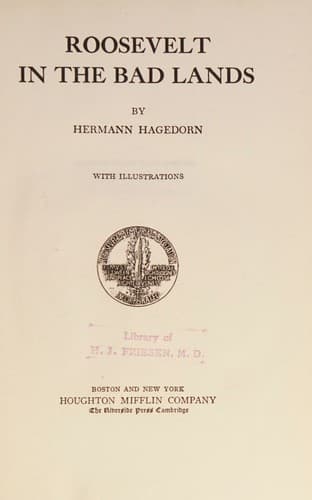
Biography; Frontier and pioneer life -- Dakota Territory; Roosevelt, Theodore, 1858-1919
As for our coming back [he wrote his brother in January],
you need not worry about that. As soon as I serve out my
time and my sentence expires I shall return. Am having a
good time and enjoy myself, should anywhere if I knew I
could not do any better and was obliged to, but this is just
about like being transported to Siberia, just about as cold,
barren and desolate and most as far out of the way. It was
hotter here last summer than it ever was at home and it has
been colder here this winter than it ever was at home, 50
and 65 below all one week. Don't see how the cattle live at
all and there is lots of them dieing. You can find them all
around where they lay nights in the bushes. The poor ones
will all go, I guess. They say they will die worse in the
spring. The fat strong ones will get through, I guess. Don't
know that any of our hundred have died yet, but I don't
believe this is a good country to raise cattle in.
Am afraid Theodore will not make so much as he has been led
to think he would. There are lots of bleeders here, but we
mean to fend them off from him as well as we can.
Roosevelt spent the coldest months in New York, working steadily on
his new book which was to be called "Hunting Trips of a Ranchman." On
the 8th of March he wrote Lodge, "I have just sent my last roll of
manuscript to the printers"; adding, "in a fortnight I shall go out
West." But he postponed his departure, held possibly by the lure of
the hunting-field; for on the 29th he rode with the Meadowbrook hounds
and was "in at the death." It was presumably in the first days of
April that he arrived at Medora. If tradition may be trusted, he came
in all the glory of what were known as "store clothes." The Pittsburgh
_Despatch_, which sent out a reporter to the train to interview him as
he passed through that city, westward-bound, refers to "the high
expanse of white linen which enclosed his neck to the ears," which
sounds like a slight exaggeration. Tradition does insist, however,
that he wore a derby hat when he arrived, which was considered highly
venturesome. Derby hats as a rule were knocked off on sight and then
bombarded with six-shooters beyond recognition. Roosevelt informed his
fellow citizens early in his career as a cowpuncher that he intended
to wear any hat he pleased. Evidently it was deemed expedient to
suspend the rule in his case, for he was not molested.
Public-domain text, read in full here on John Shaqi.
Reviews
Reviews
No reviews yet
Be the first to share your thoughts on this work.
Elsewhere in the archive
Join the Discussion
Join the discussion
Sign in to leave a comment or review.
Sign InorCreate an account