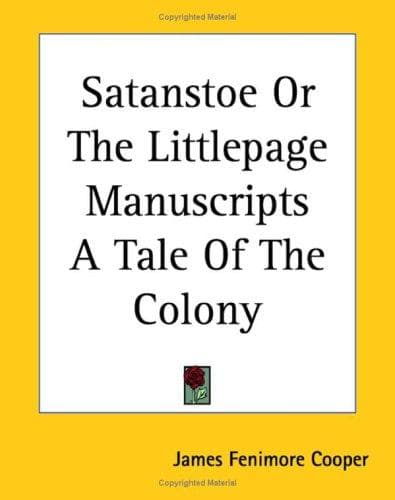
Satanstoe; Or, the Littlepage Manuscripts. A Tale of the ColonyCooper, James Fenimore
General
Satanstoe; Or, the Littlepage Manuscripts. A Tale of the Colony
Cooper, James Fenimore
Antirent War, N.Y., 1839-1846 -- Fiction
The clearings of Ravensnest were neither very large nor very inviting. In
that day, the settlement of new lands was a slow and painful operation, and
was generally made at a great outlay to the proprietor. Various expedients
were adopted to free the earth from its load of trees; [33] for, at that
time, the commerce of the colonies did not reward the toil of the settler
in the same liberal manner as has since occurred. Herman Mordaunt, as we
moved along, related to me the cost and trouble he had been at already, in
getting the ten or fifteen families who were on his property, in the first
place, to the spot itself; and, in the second place, to induce them to
remain there. Not only was he obliged to grant leases for three lives,
or, in some cases, for thirty or forty years, at rents that were merely
nominal, but, as a rule, the first six or eight years the tenants were to
pay no rent at all. On the contrary, he was obliged to extend to them many
favours, in various ways, that cost no inconsiderable sum in the course of
the year. Among other things, his agent kept a small shop, that contained
the most ordinary supplies used by families of the class of the settler,
and these he sold at little more than cost, for their accommodation,
receiving his pay in such articles as they could raise from their
half-tilled fields, or their sugar-bushes, and turning those again into
money, only after they were transported to Albany, at the end of a
considerable period. In a word, the commencement of such a settlement was
an arduous undertaking, and the experiment was not very likely to succeed,
unless the landlord had both capital and patience.
The political economist can have no difficulty in discovering the causes of
the circumstances just mentioned. They were to be found in the fact that
people were scarce, while land was superabundant. In such a condition of
society, the tenant had the choice of his farm, instead of the landlord's
having a selection of his tenants, and the latter were to be bought only on
such conditions as suited themselves.
“You see,” continued Herman Mordaunt, as we walked together, conversing on
this subject, “that my twenty thousand acres are not likely to be of much
use to myself, even should they prove to be of any to my daughter. A
century hence, indeed, my descendants may benefit from all this outlay of
money and trouble; but it is not probable that either I or Anneke will ever
see the principal and interest of the sums that will be expended in the way
of roads, bridges, mills, and other things of that sort. Years must go
by, before the light rents which will only begin to be paid a year or two
hence, and then only by a very few tenants, can amount to a sufficient sum
to meet the expenses of keeping up the settlement, to say nothing of the
quit-rents to be paid to the crown.”
Public-domain text, read in full here on John Shaqi.
Reviews
Reviews
No reviews yet
Be the first to share your thoughts on this work.
Elsewhere in the archive
Join the Discussion
Join the discussion
Sign in to leave a comment or review.
Sign InorCreate an account