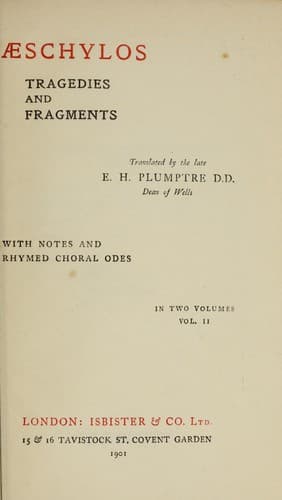
Aeschylus -- Translations into English; Mythology, Greek -- Drama
_Ægis._ Hail, kindly light of day that vengeance brings!
Now I can say the Gods on high look down,
Avenging men, upon the woes of earth,
Since lying in the robes the Erinnyes wove
I see this man, right welcome sight to me,
Paying for deeds his father's hand had wrought. 1560
Atreus, our country's ruler, this man's father,
Drove out my sire Thyestes, his own brother,
(To tell the whole truth,) quarrelling for rule,
An exile from his country and his home.
And coming back a suppliant on the hearth,
The poor Thyestes found a lot secure,
Nor did he, dying, stain the soil with blood,
There in his home. But this man's godless sire,[397]
Atreus, more prompt than kindly in his deeds,
On plea of keeping festal day with cheer,
To my sire banquet gave of children's flesh, 1570
His own. The feet and finger-tips of hands
*He, sitting at the top, apart concealed;
And straight the other, in his blindness taking
The parts that could not be discerned, did eat
A meal which, as thou see'st, perdition works
For all his kin. And learning afterwards
The deed of dread, he groaned and backward fell,
Vomits the feast of blood, and imprecates
On Pelops' sons a doom intolerable,
And makes the o'erturning of the festive board,
With fullest justice, as a general curse,
That so might fall the race of Pleisthenes. 1580
And now thou see'st how here accordingly
This man lies fallen; I, of fullest right,
The weaver of the plot of murderous doom.
For me, a babe in swaddling-clothes, he banished
With my poor father, me, his thirteenth child;
And Vengeance brought me back, of full age grown:
And e'en far off I wrought against this man,
And planned the whole scheme of this dark device.
And so e'en death were now right good for me,
Seeing him into the nets of Vengeance fallen.
_Chor._ I honour not this arrogance in guilt, 1590
Ægisthos. Thou confessest thou hast slain
Of thy free will our chieftain here,—that thou
Alone did'st plot this murder lamentable;
Be sure, I say, thy head shall not escape
The righteous curse a people hurls with stones.
_Ægisth._ Dost thou say this, though seated on the bench
Of lowest oarsmen, while the upper row
Commands the ship?[398] But thou shalt find, though old,
How hard it is at such an age to learn,
When the word is, “keep temper.” But a prison
And fasting pains are admirably apt, 1600
As prophet-healers even for old age.
Dost see, and not see this? Against the pricks
Kick not,[399] lest thou perchance should'st smart for it.
_Chor._ Thou, thou, O Queen, when thy lord came from war,
While keeping house, thy husband's bed defiling,
Did'st scheme this death for this our hero-chief.
Public-domain text, read in full here on John Shaqi.
Reviews
Reviews
No reviews yet
Be the first to share your thoughts on this work.
Elsewhere in the archive
Join the Discussion
Join the discussion
Sign in to leave a comment or review.
Sign InorCreate an account