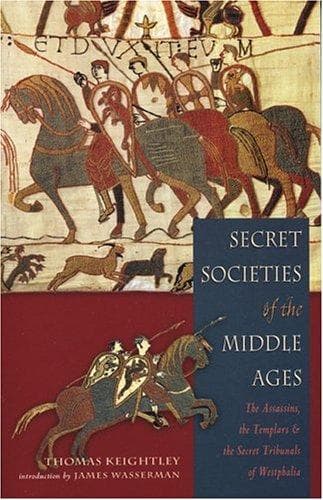
Secret Societies of the Middle AgesKeightley, Thomas
History
Secret Societies of the Middle Ages
Keightley, Thomas
Secret societies
It is an important advance in civilization, and a great social gain, to
have got rid, for all public purposes, of Secret Societies--both of
their existence and of their use; for, that, like most of the other
obsolete forms into which the arrangements of society have at one time
or other resolved themselves, some of these mysterious and exclusive
institutions, whether for preserving knowledge or dispensing justice,
served, each in its day, purposes of the highest utility, which
apparently could not have been accomplished by any other existing or
available contrivance, has been sufficiently shown by the expositions
that have been given, in the preceding pages, of the mechanism and
working of certain of the most remarkable of their number. But it has
been made at least equally evident that the evils attendant upon their
operation, and inherent in their nature, were also very great, and that,
considered even as the suitable remedies for a most disordered condition
of human affairs, they were at best only not quite so bad as the
disease. They were institutions for preserving knowledge, not by
promoting, but by preventing that diffusion of it which, after all, both
gives to it its chief value, and, in a natural state of things, most
effectually ensures its purification, as well as its increase; and for
executing justice, by trampling under foot the rights alike of the
wrong-doer and of his victim. Mankind may be said to have stepped out of
night into day, in having thrown off the burden and bondage of this form
of the social system, and having attained to the power of pursuing
knowledge in the spirit of knowledge, and justice in the spirit of
justice. We have now escaped from that state of confusion and conflict
in which one man's gain was necessarily another man's loss, and are
fairly on our way towards that opposite state in which, in everything,
as far as the constitution of this world will permit, the gain of one
shall be the gain of all. This latter, to whatever degree it may be
actually attainable, is the proper hope and goal of all human
civilization.
THE END.
London: Printed by W. CLOWKS and SONS, Stamford Street.
* * * * *
Transcriber's Note: Variations in spelling, hyphens, and accents left as
printed.
Public-domain text, read in full here on John Shaqi.
Reviews
Reviews
No reviews yet
Be the first to share your thoughts on this work.
Elsewhere in the archive
Join the Discussion
Join the discussion
Sign in to leave a comment or review.
Sign InorCreate an account