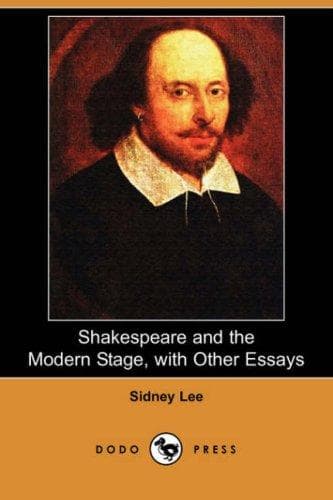
Shakespeare and the Modern Stage; with Other EssaysLee, Sidney, Sir
History
Shakespeare and the Modern Stage; with Other Essays
Lee, Sidney, Sir
Shakespeare, William, 1564-1616; Shakespeare, William, 1564-1616 -- Stage history
O, it is excellent
To have a giant's strength; but it is tyrannous
To use it like a giant.
Mercy is the predominating or crowning virtue that Shakespeare demands
in rulers. But the Shakespearean code is innocent of any taint of
sentimentality, and mercifulness is far from being the sovereign's
sole qualification or primal test of fitness. More especially are
kings and judges bound by their responsibilities and their duties to
eschew self-glorification or self-indulgence. It is the _virtues_ of
the holders of office, not their office itself, which alone in the end
entitles them to consideration. Adventitious circumstances give no man
claim to respect. A man is alone worthy of regard by reason of his
personal character. Honour comes from his own acts, neither from his
"foregoers," _i.e._, ancestors, nor from his rank in society. "Good
alone is good without a name." This is not the view of the world,
which values lying trophies, rank, or wealth. The world is thereby the
sufferer.[30]
[Footnote 30:
From lowest place, when virtuous things proceed,
The place is dignified by the doer's deed:
Where great additions swell's, and virtue none,
It is a dropsied honour: good alone
Is good without a name; vileness is so:
The property by what it is should go,
Not by the title; ... that is honour's scorn,
Which challenges itself as honour's born,
And is not like the sire: honours thrive
When rather from our acts we them derive
Than our foregoers: the mere word's a slave,
Debauch'd on every tomb; on every grave
A lying trophy; and as oft is dumb
Where dust and damn'd oblivion is the tomb
Of honour'd bones indeed.
(_All's Well_, II., iii., 130 _seq._)]
The world honours a judge; but if the judge be indebted to his office
and not to his character for the respect that is paid him, he may
deserve no more honour than the criminal in the dock, whom he
sentences to punishment. "A man may see how this world goes with no
eyes," says King Lear to the blind Gloucester. "Look with thine ears;
see how yond justice rails upon yond simple thief. Hark, in thine ear;
change places, and, handy-dandy, which is the justice, which is the
thief? Thou hast seen a farmer's dog bark at a beggar? And the
creature run from the cur? There thou mightst behold the great image
of authority; a dog's obeyed in office." "The great image of
authority" is often a brazen idol.
Hereditary rulers form no inconsiderable section of Shakespeare's
_dramatis personae_. In _Macbeth_ (IV., iii., 92-4) he specifically
defined "the king-becoming graces":--
As justice, verity, temperance, stableness,
Bounty, perseverance, mercy, lowliness,
Devotion, patience, courage, fortitude.
Public-domain text, read in full here on John Shaqi.
Reviews
Reviews
No reviews yet
Be the first to share your thoughts on this work.
Elsewhere in the archive
Join the Discussion
Join the discussion
Sign in to leave a comment or review.
Sign InorCreate an account