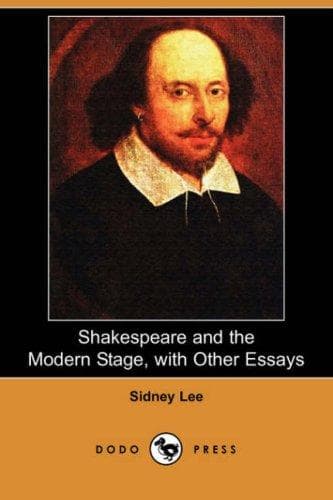
Shakespeare and the Modern Stage; with Other EssaysLee, Sidney, Sir
History
Shakespeare and the Modern Stage; with Other Essays
Lee, Sidney, Sir
Shakespeare, William, 1564-1616; Shakespeare, William, 1564-1616 -- Stage history
Elsewhere Shakespeare utters a vivacious warning against the patriot's
exclusive claim for his country of natural advantages, which all the
world shares substantially alike.
Hath Britain all the sun that shines? Day, night,
Are they not but in Britain? I' the world's volume
Our Britain seems as of it, but not in 't;
In a great pool, a swan's nest: prithee, think
There's livers out of Britain.[36]
[Footnote 36: _Cymbeline_, III., iv., 139-43.]
It is not the wild hunger for war, but the stable interests of peace
that are finally subserved in the Shakespearean world by true and
well-regulated patriotism. _Henry V._, the play of Shakespeare which
shows the genuine patriotic instinct in its most energetic guise, ends
with a powerful appeal to France and England, traditional foes, to
cherish "neighbourhood and Christianlike accord," so that never again
should "war advance his bleeding sword 'twixt England and fair
France."
However whole-heartedly Shakespeare rebukes the excesses and illogical
pretensions to which the lack of moral or intellectual discipline
exposes patriotism, he reserves his austerest censure for the
disavowal of the patriotic instinct altogether. One of the greatest of
his plays is practically a diagnosis of the perils which follow in the
train of a wilful abnegation of the normal instinct. In _Coriolanus_
Shakespeare depicts the career of a man who thinks that he can, by
virtue of inordinate self-confidence and belief in his personal
superiority over the rest of his countrymen, safely abjure and defy
the common patriotic instinct, which, after all, keeps the State in
being. "I'll never," says Coriolanus,
"Be such a gosling to obey instinct, but stand
As if a man were author of himself,
And knew no other kin."[37]
[Footnote 37: _Coriolanus_, V., iii., 34-7.]
Coriolanus deliberately suppresses the patriotic instinct, and, with
greater consistency than others who have at times followed his
example, joins the fighting ranks of his country's enemies by way of
illustrating his sincerity. His action proves to be in conflict with
the elementary condition of social equilibrium. The subversion of the
natural instinct is brought to the logical issues of sin and death.
Domestic ties are rudely severed. The crime of treason is risked with
an insolence that is fatal to the transgressor. With relentless logic
does the Shakespearean drama condemn defiance of the natural instinct
of patriotism.
III
Public-domain text, read in full here on John Shaqi.
Reviews
Reviews
No reviews yet
Be the first to share your thoughts on this work.
Elsewhere in the archive
Join the Discussion
Join the discussion
Sign in to leave a comment or review.
Sign InorCreate an account