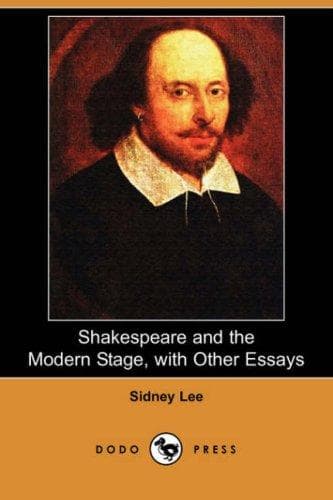
Shakespeare and the Modern Stage; with Other EssaysLee, Sidney, Sir
History
Shakespeare and the Modern Stage; with Other Essays
Lee, Sidney, Sir
Shakespeare, William, 1564-1616; Shakespeare, William, 1564-1616 -- Stage history
A further stroke of Shakespeare's social criticism hits the
thoughtless pursuit of novelty, which infected the nation and found
vent in Shakespeare's day in the patronage of undignified shows and
sports. When Trinculo, perplexed by the outward aspect of the hideous
Caliban, mistakes him for a fish, he remarks: "Were I in England now,
as once I was, and had but this fish painted, not a holiday fool there
but would give a piece of silver: there would this monster make a man;
any strange beast there makes a man: when they will not give a doit to
relieve a lame beggar, they will lay out ten to see a dead Indian."
Shakespeare seems slyly to confess a personal conviction of defective
balance in the popular judgment when he makes the first grave-digger
remark that Hamlet was sent into England because he was mad.
"He shall recover his wits there," the old clown suggests, "or if he
do not, 'tis no great matter there."
"Why?" asks Hamlet.
"'Twill not be seen in him there; there the men are as mad as he."
So, too, in the emphatically patriotic play of _Henry V._, Shakespeare
implies that he sees some purpose in the Frenchman's jibes at the
foggy, raw, and dull climate of England, which engenders in its
inhabitants, the Frenchman argues, a frosty temperament, an ungenial
coldness of blood. Nor does the dramatist imply dissent from the
French marshal's suggestion that Englishmen's great meals of beef
impair the efficiency of their intellectual armour. The point of the
reproof is not blunted by the subsequent admission of a French critic
in the same scene to the effect that, however robustious and rough in
manner Englishmen may be, they have the unmatchable courage of the
English breed of mastiffs. To credit men with the highest virtues of
which dogs are capable is a grudging compliment.
V
To sum up. The Shakespearean drama enjoins those who love their
country wisely to neglect no advantage that nature offers in the way
of resisting unjust demands upon it; to remember that her prosperity
depends on her command of the sea,--of "the silver sea, which serves
it in the office of a wall, or as a moat defensive to a house, against
the envy of less happier lands"; to hold firm in the memory "the dear
souls" who have made "her reputation through the world"; to subject at
need her faults and frailties to criticism and rebuke; and finally to
treat with disdain those in places of power, who make of no account
their responsibilities to the past as well as to the present and the
future. The political, social, and physical conditions of his country
have altered since Shakespeare lived. England has ceased to be an
island-power. The people rule instead of the king. Social
responsibilities are more widely acknowledged. But the dramatist's
doctrine of patriotism has lost little of its pristine vitality, and
is relevant to current affairs.
IX
A PERIL OF SHAKESPEAREAN RESEARCH[38]
[Footnote 38: This paper was first printed in _The Author_, October
1903.]
I
Public-domain text, read in full here on John Shaqi.
Reviews
Reviews
No reviews yet
Be the first to share your thoughts on this work.
Elsewhere in the archive
Join the Discussion
Join the discussion
Sign in to leave a comment or review.
Sign InorCreate an account