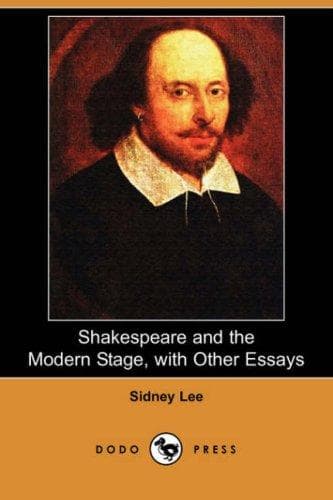
Shakespeare and the Modern Stage; with Other EssaysLee, Sidney, Sir
History
Shakespeare and the Modern Stage; with Other Essays
Lee, Sidney, Sir
Shakespeare, William, 1564-1616; Shakespeare, William, 1564-1616 -- Stage history
us a personal reminiscence of the great dramatist.
The _Theatrical Review_, in its second number, offered an anonymous
biography of the great actor and theatrical manager of Shakespeare's
day, Edward Alleyn. This biography was clearly one of Steevens's
earliest efforts. It is for the most part an innocent compilation. But
it contains one passage in its author's characteristic vein of
mischief. Midway in the essay the reader is solemnly assured that a
brand-new contemporary reference to Alleyn's eminent associate
Shakespeare was at his disposal. The new story "carries with it"
(asserts the writer) "all the air of probability and truth, and has
never been in print before." "A gentleman of honour and veracity," run
the next sentences, which were designed to put the unwary student off
his guard, "in the commission of the peace for Middlesex, has shown us
a letter dated in the year 1600, which he assures us has been in the
possession of his family, by the mother's side, for a long series of
years, and which bears all the marks of antiquity." The superscription
was interpreted to run: "For Master Henrie Marle, livynge at the sygne
of the rose by the palace."
There follows at length the paper of which the family of the
honourable and veracious gentleman "in the commission of the peace for
Middlesex" had become possessed "by the mother's side." The words were
these:--
"FRIENDE MARLE,
"I must desyre that my syster hyr watche, and the cookerie
booke you promysed, may be sent by the man. I never longed
for thy company more than last night; we were all very
merrye at the Globe, when Ned Alleyn did not scruple to
affyrme pleasantely to thy friend Will, that he had stolen
his speech about the qualityes of an actor's excellencye, in
_Hamlet_ hys tragedye, from conversations manyfold which had
passed between them, and opinyons given by Allen touchinge
the subject. Shakespeare did not take this talke in good
sorte; but Jonson put an end to the stryfe with wittielie
saying: 'This affaire needeth no contentione; you stole it
from Ned, no doubt; do not marvel; have you not seen him act
tymes out of number?'
"Believe me most syncerelie,
"Harrie,
"Thyne,
"G. PEEL."
The text of this strangely-spelt, strangely-worded epistle, with its
puny efforts at a jest, was succeeded by a suggestion that "G. Peel,"
the alleged signatory, could be none other than George Peele, the
dramatist, who achieved reputation in Shakespeare's early days, and
was an industrious collector of anecdotes.
Public-domain text, read in full here on John Shaqi.
Reviews
Reviews
No reviews yet
Be the first to share your thoughts on this work.
Elsewhere in the archive
Join the Discussion
Join the discussion
Sign in to leave a comment or review.
Sign InorCreate an account