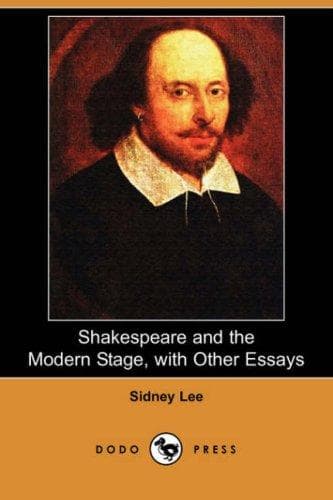
Shakespeare and the Modern Stage; with Other EssaysLee, Sidney, Sir
History
Shakespeare and the Modern Stage; with Other Essays
Lee, Sidney, Sir
Shakespeare, William, 1564-1616; Shakespeare, William, 1564-1616 -- Stage history
No one did more as an admiring critic and translator of Shakespeare
than Jean Francois Ducis, who prepared six of Shakespeare's greatest
plays for the French stage at the end of the eighteenth century. Not
only did Ducis introduce Shakespeare's masterpieces to thousands of
his countrymen who might otherwise never have heard of them, but his
renderings of Shakespeare were turned into Italian and many languages
of Eastern Europe. They spread the knowledge of Shakespeare's
achievement to the extreme boundaries of the European Continent.
Apparently Ducis did his work under favourable auspices. He
corresponded regularly with Garrick, and he was never happier than
when studying Shakespeare's text with a portrait of Shakespeare at his
side. Yet, in spite of Ducis's unquestioned reverence and his
honourable intentions, all his translations of Shakespeare are gross
perversions of their originals. It is not merely that he is verbally
unfaithful. He revises the development of the plots; he gives the
_dramatis personae_ new names.
Ducis's _Othello_ was accounted his greatest triumph. The play shows
Shakespeare's mastery of the art of tragedy at its highest stage of
development, and rewards the closest study. But the French translator
ignored the great tragic conception which gives the drama its pith and
moment. He converted the piece into a romance. Towards the end of his
rendering Iago's villanies are discovered by Othello; Othello and
Desdemona are reconciled; and the Moor, exulting in his newly
recovered happiness, pardons Iago. The curtain falls on a dazzling
scene of domestic bliss.
Ducis frankly acknowledged that he was guilty of a somewhat strained
interpretation of Shakespeare's tragic scheme, but he defended himself
on the ground that French refinement and French sensitiveness could
not endure the agonising violence of the true catastrophe. It is,
indeed, the fact that the patrons of the Comedie Francaise strictly
warned the adapter against revolting their feelings by reproducing the
"barbarities" that characterised the close of Shakespeare's tragic
masterpiece.
Public-domain text, read in full here on John Shaqi.
Reviews
Reviews
No reviews yet
Be the first to share your thoughts on this work.
Elsewhere in the archive
Join the Discussion
Join the discussion
Sign in to leave a comment or review.
Sign InorCreate an account