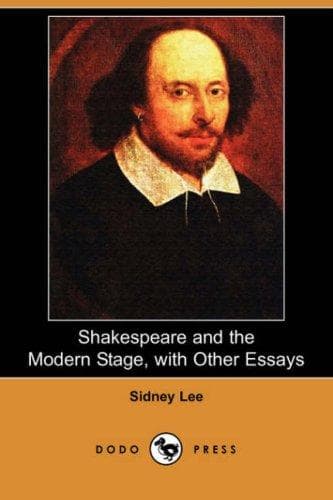
Shakespeare and the Modern Stage; with Other EssaysLee, Sidney, Sir
History
Shakespeare and the Modern Stage; with Other Essays
Lee, Sidney, Sir
Shakespeare, William, 1564-1616; Shakespeare, William, 1564-1616 -- Stage history
We would give much to know how Shakespeare recorded in his diary the
first performance of _Hamlet_, the most fascinating of all his works.
He himself, we are credibly told, played the Ghost. We would give much
for a record of the feelings which lay on the first production of the
play beneath the breast of the silent apparition in the first scene
which twice crossed the stage and affrighted Marcellus, Horatio, and
the guards on the platform before the castle of Elsinore. No piece of
literature that ever came from human pen or brain is more closely
packed with fruit of the imaginative study of human life than is
Shakespeare's tragedy of _Hamlet_; and while the author acted the part
of the Ghost in the play's initial representation in the theatre, he
was watching the revelation of his pregnant message for the first time
to the external world. When the author in his weird role of Hamlet's
murdered father opened his lips for the first time, we might almost
imagine that in the words "pity me not, but lend thy serious hearing
to what I shall unfold," he was reflecting the author's personal
interest in the proceedings of that memorable afternoon.[5] We can
imagine Shakespeare, as he saw the audience responding to his grave
appeal, giving with a growing confidence, the subsequent words, which
he repeated while he moved to the centre of the platform-stage, and
turned to face the whole house:--
I find thee apt;
And duller shouldst thou be than the fat weed
That rots itself in ease on Lethe wharf,
Wouldst thou not stir in this.
[Footnote 5: Performances of plays in Shakespeare's time always took
place in the afternoon.]
As the Ghost vanished and the air rang mysteriously with his piercing
words "Remember me," we would like to imagine the whole intelligence
of Elizabethan England responding to that cry as it sprang on its
first utterance in the theatre from the great dramatist's own lips.
Since that memorable day, at any rate, the whole intelligence of the
world has responded to that cry with all Hamlet's ecstasy, and with
but a single modification of the phraseology:--
Remember thee!
Ay, thou _great soul_, while memory holds a seat
In this distracted globe.
III
Public-domain text, read in full here on John Shaqi.
Reviews
Reviews
No reviews yet
Be the first to share your thoughts on this work.
Join the Discussion
Join the discussion
Sign in to leave a comment or review.
Sign InorCreate an account