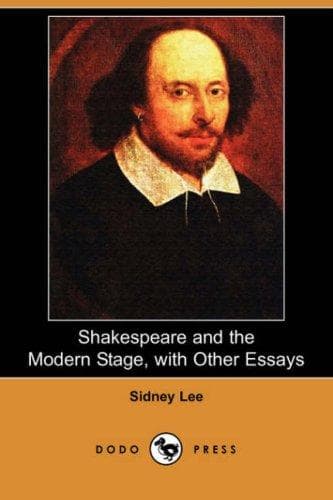
Shakespeare and the Modern Stage; with Other EssaysLee, Sidney, Sir
History
Shakespeare and the Modern Stage; with Other Essays
Lee, Sidney, Sir
Shakespeare, William, 1564-1616; Shakespeare, William, 1564-1616 -- Stage history
The personal fascination of "so worthy a friend and fellow as was our
Shakespeare" bred in all his fellow-workers an affectionate pride in
their intimacy.
Such men were the parents of the greater part of the surviving oral
tradition of Shakespeare, and no better parentage could be wished for.
To the first accessible traditions of proved oral currency after
Shakespeare's death, the two fellow-actors who called the great First
Folio into existence pledged their credit in writing only seven years
after his death. They printed in the preliminary pages of that volume
these three statements of common fame, viz., that to Shakespeare and
his plays in his lifetime was invariably extended the fullest favour
of the court and its leading officers; that death deprived him of the
opportunity he had long contemplated of preparing his literary work
for the press; and that he wrote with so rapidly flowing a pen that
his manuscript was never defaced by alteration or erasure.
Shakespeare's extraordinary rapidity of composition was an especially
frequent topic of contemporary debate. Ben Jonson, the most intimate
personal friend of Shakespeare outside the circle of working actors,
wrote how "the players" would "often mention" to him the poet's
fluency, and how he was in the habit of arguing that Shakespeare's
work would have been the better had he devoted more time to its
correction. The players, Ben Jonson adds, were wont to grumble that
such a remark was "malevolent," and he delighted in seeking to
vindicate it to them on what seemed to him to be just critical
grounds.
The copious deliverances of Jonson in the tavern-parliaments of the
London wits, which were in almost continuous session during the first
four decades of the seventeenth century, set flowing much other oral
tradition of Shakespeare, whom Jonson said he loved and whose memory
he honoured "on this side idolatry as much as any." One of Jonson's
remarks which seems to have lived longest on the lips of
contemporaries was that Shakespeare "was indeed honest and [like his
own Othello] of an open and free nature,[11] had an excellent
phantasy, brave notions and gentle expressions, wherein he flowed with
that facility that sometimes it was necessary he should be stopped."
[Footnote 11: Iago says of Othello, in _Othello_ I., iii. 405: "The
Moor is _of a free and open nature_."]
To the same category of oral tradition belongs the further piece which
Fuller enshrined in his slender biography with regard to Shakespeare's
alert skirmishes with Ben Jonson in dialectical battle. Jonson's
dialectical skill was for a long period undisputed, and for gossip to
credit Shakespeare with victory in such conflict was to pay his
memory even more enviable honour than Jonson paid it in his own
_obiter dicta_.
Public-domain text, read in full here on John Shaqi.
Reviews
Reviews
No reviews yet
Be the first to share your thoughts on this work.
Elsewhere in the archive
Join the Discussion
Join the discussion
Sign in to leave a comment or review.
Sign InorCreate an account