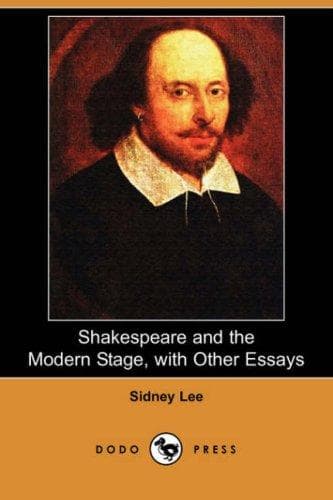
Shakespeare and the Modern Stage; with Other EssaysLee, Sidney, Sir
History
Shakespeare and the Modern Stage; with Other Essays
Lee, Sidney, Sir
Shakespeare, William, 1564-1616; Shakespeare, William, 1564-1616 -- Stage history
Not that the new demand failed quickly to create a supply of
new plays for the stage. Dryden and D'Avenant, the chief dramatists
of Pepys's day, were rapid writers. To a large extent they carried
on, with exaggeration of its defects and diminution of its merits,
the old Elizabethan tradition of heroic romance, tragedy, and
farce. The more matter-of-fact and lower-principled comedy of
manners, which is commonly reckoned the chief characteristic
of the new era in theatrical history, was only just beginning
when Pepys was reaching the end of his diary. The virtual leaders
of the new movement--Wycherley, Vanbrugh, Farquhar, and Congreve--were
not at work till long after Pepys ceased to write. He records only the
first runnings of that sparkling stream. He witnessed some impudent
comedies of Dryden, Etherege, and Sedley. But it is important to note
that he formed a low opinion of all of them. Their intellectual glitter
did not appeal to him. Their cynical licentiousness seemed to him to be
merely "silly." One might have anticipated from him a different
verdict on the frank obscenity of Restoration drama. But there are the
facts. Neither did Mr Pepys, nor (he is careful to remind us) did Mrs
Pepys, take "any manner of pleasure in" the bold indelicacy of Dryden,
Etherege, or Sedley.
When we ask what sort of pieces Pepys appreciated, we seem to be faced
by further perplexities. His highest enthusiasm was evoked by certain
plays of Ben Jonson, of Beaumont and Fletcher, and of Massinger. Near
the zenith of his scale of dramatic excellence he set the comedies of
Ben Jonson, which are remarkable for their portrayal of eccentricity
of character. These pieces, which incline to farce, give great
opportunity to what is commonly called character-acting, and
character-acting always appeals most directly to average humanity.
Pepys called Jonson's _Alchemist_ "a most incomparable play," and he
found in _Every Man in his Humour_ "the greatest propriety of speech
that ever I read in my life." Similarly, both the heroic tragedies and
the comedies of Beaumont and Fletcher, of which he saw no less than
nineteen, roused in him, as a rule, an ecstatic admiration. But of all
dramatic entertainments which the theatre offered him, Pepys was most
"taken" by the romantic comedy from the pen of Massinger, which is
called _The Bondman_. "There is nothing more taking in the world with
me than that play," he writes.
Massinger's _Bondman_ is a well-written piece, in which an heroic
interest is fused with a genuine spirit of low comedy. Yet Pepys's
unqualified commendation of it presents a problem. Massinger's play,
like the cognate work of Fletcher, offers much episode which is hardly
less indecent than those early specimens of Restoration comedy of
which Pepys disapproved. A leading character is a frowsy wife who
faces all manner of humiliation, in order to enjoy, behind her elderly
husband's back, the embraces of a good-looking youth.
Public-domain text, read in full here on John Shaqi.
Reviews
Reviews
No reviews yet
Be the first to share your thoughts on this work.
Elsewhere in the archive
Join the Discussion
Join the discussion
Sign in to leave a comment or review.
Sign InorCreate an account