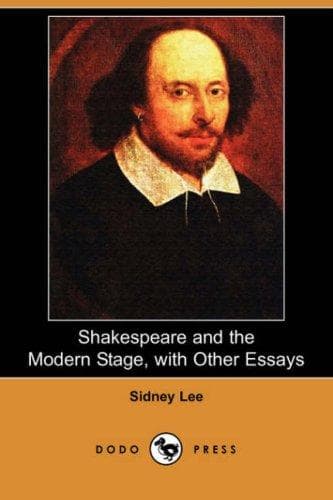
Shakespeare and the Modern Stage; with Other EssaysLee, Sidney, Sir
History
Shakespeare and the Modern Stage; with Other Essays
Lee, Sidney, Sir
Shakespeare, William, 1564-1616; Shakespeare, William, 1564-1616 -- Stage history
Pepys is scarcely less tolerant of Fletcher's more flagrant
infringements of propriety. In the whole of the Elizabethan drama
there was no piece which presented so liberal a mass of indelicacy as
Fletcher's _Custom of the Country_. Dryden, who was innocent of
prudery, declared that there was "more indecency" in that drama "than
in all our plays together." This was one of the pieces which Pepys
twice saw performed after carefully reading it in his study, and he
expressed admiration for the rendering of the widow's part by his
pretty friend, Mistress Knipp. One has to admit that Pepys condemned
the play from a literary point of view as "a very poor one, methinks,"
as "fully the worst play that I saw or believe shall see." But the
pleasure which Mistress Knipp's share in the performance gave him
suggests, in the absence of any explicit disclaimer, that the
improprieties of both plot and characters escaped his notice, or, at
any rate, excited in him no disgust. Massinger's _Bondman_, Pepys's
ideal of merit in drama, has little of the excessive grossness of the
_Custom of the Country_. But to some extent it is tarred with the same
brush.
Pepys's easy principles never lend themselves to very strict
definition. Yet he may be credited with a certain measure of
discernment in pardoning the indelicacy of Fletcher and Massinger,
while he condemns that of Dryden, Etherege, or Sedley. Indelicacy in
the older dramatists does not ignore worthier interests. Other topics
attracted the earlier writers besides conjugal infidelity and the
frailty of virgins, which were the sole themes of Restoration comedy.
Massinger's heroes are not always gay seducers. His husbands are not
always fools. Pepys might quite consistently scorn the ribaldry of
Etherege and condone the obscenity of Fletcher. It was a question of
degree. Pepys was clear in his own mind that a line must be drawn
somewhere, though it would probably have taxed his logical power to
make the delimitation precise.
IV
Public-domain text, read in full here on John Shaqi.
Reviews
Reviews
No reviews yet
Be the first to share your thoughts on this work.
Elsewhere in the archive
Join the Discussion
Join the discussion
Sign in to leave a comment or review.
Sign InorCreate an account