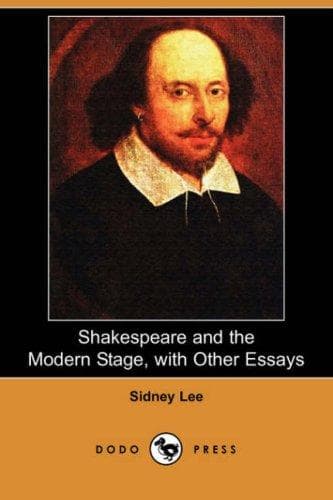
Shakespeare and the Modern Stage; with Other EssaysLee, Sidney, Sir
History
Shakespeare and the Modern Stage; with Other Essays
Lee, Sidney, Sir
Shakespeare, William, 1564-1616; Shakespeare, William, 1564-1616 -- Stage history
But the situation in Pepys's day had, despite all the perils that
menaced it, a saving grace. Great acting, inspired acting, is an
essential condition to any general appreciation in the theatre of
Shakespeare's dramatic genius. However seductive may be the
musico-scenic ornamentation, Shakespeare will never justly affect the
mind of the average playgoer unless great or inspired actors are at
hand to interpret him. Luckily for Pepys, he was the contemporary of
at least one inspired Shakespearean actor. The exaltation of spirit to
which he confesses, when he witnessed Betterton in the role of Hamlet,
is proof that the prosaic multitude for whom he speaks will always
respond to Shakespeare's magic touch when genius wields the actor's
wand. One could wish nothing better for the playgoing public of to-day
than that the spirit of Betterton, Shakespeare's guardian angel in the
theatre of the Restoration, might renew its earthly career in our own
time in the person of some contemporary actor.
V
MR BENSON AND SHAKESPEAREAN DRAMA[20]
[Footnote 20: This paper was first printed in the _Cornhill Magazine_,
May 1900.]
I
Dramatic criticism in the daily press of London often resembles that
method of conversation of which Bacon wrote that it seeks "rather
commendation of wit, in being able to hold argument, than of judgment,
in discerning what is true." For four-and-twenty years Mr F.R. Benson
has directed an acting company which has achieved a reputation in
English provincial cities, in Ireland, and in Scotland, by its
exclusive devotion to Shakespearean and classical drama. Mr Benson's
visits to London have been rare. There he has too often made sport for
the journalistic censors who aim at "commendation of wit."
Even the best-intentioned of Mr Benson's critics in London have fallen
into the habit of concentrating attention on unquestionable defects in
Mr Benson's practice, to the neglect of the vital principles which are
the justification of his policy. Mr Benson's principles have been
largely ignored by the newspapers; but they are not wisely
disregarded. They are matters of urgent public interest. They point
the right road to the salvation of Shakespearean drama on the modern
stage. They cannot be too often pressed on public notice.
These, in my view, are the five points of the charter which Mr Benson
is and has long been championing with a persistency which claims
national recognition.
Firstly, it is to the benefit of the nation that Shakespeare's plays
should be acted constantly and in their variety.
Secondly, a theatrical manager who undertakes to produce Shakespearean
drama should change his programme at frequent intervals, and should
permit no long continuous run of any single play.
Thirdly, all the parts, whatever their significance, should be
entrusted to exponents who have been trained in the delivery of blank
verse, and have gained some knowledge and experience of the range of
Shakespearean drama.
Public-domain text, read in full here on John Shaqi.
Reviews
Reviews
No reviews yet
Be the first to share your thoughts on this work.
Elsewhere in the archive
Join the Discussion
Join the discussion
Sign in to leave a comment or review.
Sign InorCreate an account