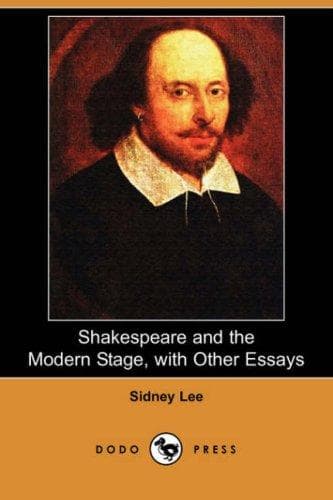
Shakespeare and the Modern Stage; with Other EssaysLee, Sidney, Sir
History
Shakespeare and the Modern Stage; with Other Essays
Lee, Sidney, Sir
Shakespeare, William, 1564-1616; Shakespeare, William, 1564-1616 -- Stage history
Other adaptations of Shakespeare, which followed somewhat less
spectacular methods of barbarism, roused in Pepys smaller enthusiasm.
_The Rivals_, a version by D'Avenant of _The Two Noble Kinsmen_ (the
joint production of Fletcher and Shakespeare), was judged by Pepys to
be "no excellent piece," though he appreciated the new songs, which
included the familiar "My lodging is on the cold ground," with music
by Matthew Locke. Pepys formed a higher opinion of D'Avenant's
liberally-altered version of _Measure for Measure_, which the adapter
called _The Law against Lovers_, and into which he introduced, with
grotesque effect, the characters of Beatrice and Benedick from _Much
Ado about Nothing_. But it is more to Pepys's credit that he bestowed
a very qualified approval on an execrable adaptation by the actor Lacy
of _The Taming of the Shrew_. Here the hero, Petruchio, is
overshadowed by a new character, Sawney, his Scottish servant, who
speaks an unintelligible _patois_. "It hath some very good pieces in
it," writes Pepys, "but generally is but a mean play, and the best
part, Sawny, done by Lacy, hath not half its life by reason of the
words, I suppose, not being understood, at least by me."
VI
It might be profitable to compare Pepys's experiences as a spectator
of Shakespeare's plays on the stage with the opportunities open to
playgoers at the present moment. Modern managers have been producing
Shakespearean drama of late with great liberality, and usually in much
splendour. Neither the points of resemblance between the modern and
the Pepysian methods, nor the points of difference, are flattering to
the esteem of ourselves as a literature-loving people. It is true that
we no longer garble our acting versions of Shakespeare. We are content
with abbreviations of the text, some of which are essential, but many
of which injure the dramatic perspective, and with inversion of scenes
which may or may not be justifiable. But, to my mind, it is in our
large dependence on scenery that we are following too closely that
tradition of the Restoration which won the wholehearted approval of
Pepys. The musico-scenic method of producing Shakespeare can always
count on the applause of the average multitude of playgoers, of which
Pepys is the ever-living spokesman. It is Shakespeare with scenic
machinery, Shakespeare with new songs, Shakespeare with incidental
music, Shakespeare with interpolated ballets, that reaches the heart
of the British public. If the average British playgoer were gifted
with Pepys's frankness, I have little doubt that he would echo the
diarist's condemnation of Shakespeare in his poetic purity, of
Shakespeare as the mere interpreter of human nature, of Shakespeare
without flying machines, of Shakespeare without song and dance; he
would characterise undiluted Shakespearean drama as "a mean thing," or
the most tedious entertainment that ever he was at in his life.
Public-domain text, read in full here on John Shaqi.
Reviews
Reviews
No reviews yet
Be the first to share your thoughts on this work.
Elsewhere in the archive
Join the Discussion
Join the discussion
Sign in to leave a comment or review.
Sign InorCreate an account