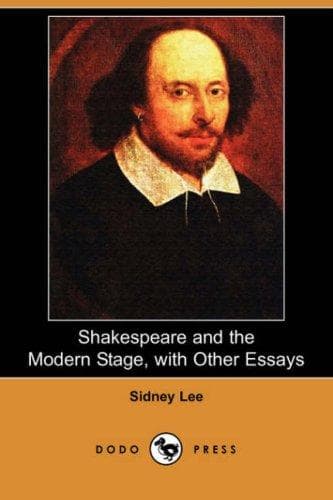
Shakespeare and the Modern Stage; with Other EssaysLee, Sidney, Sir
History
Shakespeare and the Modern Stage; with Other Essays
Lee, Sidney, Sir
Shakespeare, William, 1564-1616; Shakespeare, William, 1564-1616 -- Stage history
Other circumstances are no less promising. The justice of the cry for
the due safeguarding of the country's dramatic art by means of
publicly-organised effort has been repeatedly acknowledged of late by
men of experience alike in dramatic and public affairs. In 1898 a
petition was presented to the London County Council requesting that
body to found and endow a permanent opera-house "in order to promote
the musical interest and refinement of the public and the advancement
of the art of music." The petition bore the signatures of two hundred
leaders of public opinion, including the chief members of the dramatic
profession. In this important document, particulars were given of the
manner in which the State or the municipality aided theatres in
France, Germany, Austria, and other countries of Europe. It was shown,
that in France twelve typically efficient theatres received from
public bodies an annual subsidy amounting in the aggregate to
L130,000. The wording of the petition and the arguments employed by
the petitioners were applicable to drama as well as to opera. In fact,
the case was put in a way which was more favourable to the pretensions
of drama than to those of opera. One argument which always tells
against the establishment of a publicly-subsidised opera-house in
London does not affect the establishment of a publicly-subsidised
theatre. Opera is an exotic in England; drama is a native product, and
has exerted in the past a wider influence and has attracted a wider
sympathy than Italian or German music.
The London County Council, after careful inquiry, gave the scheme of
1898 benevolent encouragement. Hope was held out that a site for
either a theatre or an opera-house might be reserved "in connection
with one of the contemplated central improvements of London." Nothing
in the recent history of the London County Council gives ground for
doubting that it will be prepared to give practical effect to a
thoroughly matured scheme.
Within the Council the principle of the municipal theatre has found
powerful advocacy. Mr John Burns, who is not merely the spokesman of
the working classes, but is a representative of earnest-minded
students of literature, has supported the principle with generous
enthusiasm. The intelligent artisans of London applaud his attitude.
The London Trades Council passed resolutions in the autumn of 1901
recommending the erection of a theatre by the London County Council,
"so that a higher standard of dramatic art might be encouraged and
made more accessible to the wage-earning classes, as is the case in
the State and municipal theatres in the principal cities on the
Continent." The gist of the argument could hardly be put more
pintally. [Transcriber's Note: so in original.]
Public-domain text, read in full here on John Shaqi.
Reviews
Reviews
No reviews yet
Be the first to share your thoughts on this work.
Elsewhere in the archive
Join the Discussion
Join the discussion
Sign in to leave a comment or review.
Sign InorCreate an account