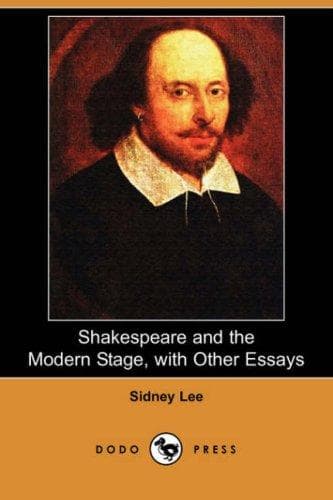
Shakespeare and the Modern Stage; with Other EssaysLee, Sidney, Sir
History
Shakespeare and the Modern Stage; with Other Essays
Lee, Sidney, Sir
Shakespeare, William, 1564-1616; Shakespeare, William, 1564-1616 -- Stage history
The net result of the municipal theatre, especially in German-speaking
countries, is that the literary drama, both of the past and present,
maintains a grip on the playgoing public which is outside English
experience. There is in Germany a very flourishing modern German drama
of literary merit. Sudermann and Hauptmann hold the ears of men of
letters throughout Europe. Dramas by these authors are constantly
presented in municipal theatres. At the same time, plays by the
classical dramatists of all European countries are performed as
constantly, and are no less popular. Almost every play of Shakespeare
is in the repertory of the chief acting companies on the German
municipal stage. At the side of Shakespeare stand Schiller and Goethe
and Lessing, the classical dramatists of Germany; Moliere, the
classical dramatist of France; and Calderon, the classical dramatist
of Spain. Public interest is liberally distributed over the whole
range of artistic dramatic effort. Indeed, during recent years
Shakespeare's plays have been performed in Germany more often than
plays of the modern German school. Schiller, the classical national
dramatist of Germany, lives more conspicuously on the modern German
stage than any one modern German contemporary writer, eminent and
popular as more than one contemporary German dramatist deservedly is.
Thus signally has the national or municipal system of theatrical
enterprise in Germany served the cause of classical drama. All the
beneficial influence and gratification, which are inherent in artistic
and literary drama, are, under the national or municipal system,
enjoyed in permanence and security by the German people.
Vienna probably offers London the most instructive example of the
national or municipal theatre. The three leading Viennese
playhouses--the Burg-Theater, the Stadt-Theater, and the
Volks-Theater--illustrate the three modes in which public credit may
be pledged to theatrical enterprise. The palatial Burg-Theater is
wholly an institution of the State. The site of the Stadt-Theater, and
to a large extent the building, were provided by the municipality,
which thereupon leased them out to a private syndicate, under a
manager of the syndicate's choosing. The municipality assumes no more
direct responsibility for the due devotion of the Stadt-Theater to
dramatic art than is implied in its retention of reversionary rights
of ownership. The third theatre, the Volks-Theater, illustrates the
minimum share that a municipality may take in promoting theatrical
enterprise, while guaranteeing the welfare of artistic drama.
Public-domain text, read in full here on John Shaqi.
Reviews
Reviews
No reviews yet
Be the first to share your thoughts on this work.
Elsewhere in the archive
Join the Discussion
Join the discussion
Sign in to leave a comment or review.
Sign InorCreate an account