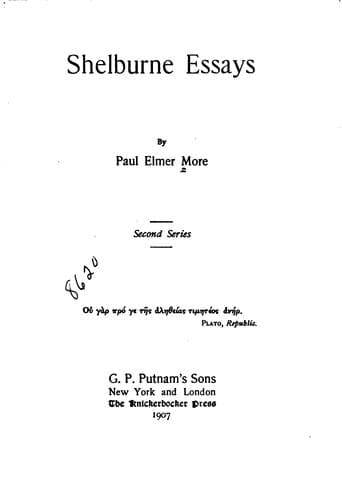
American literature -- History and criticism; English literature -- History and criticism
My imagination is so captivated upon these occasions that I seem
to partake with the navigators in all the dangers they
encountered. I lose my anchor; my mainsail is rent into shreds; I
kill a shark, and by signs converse with a Patagonian, and all
this without moving from the fireside.
And here I cannot but regret again that we have not an edition of these
letters interspersed with the passages of _The Task_, which describe the
same scenes. I confess that two-thirds at least of that poem is indeed a
task to-day. The long tirades against vice, and the equally long
preaching of virtue, all in blank verse, lack, to my ear, the vivacity
and the sustaining power of the earlier rhymed poems, such as _Hope_
(that superb moralising on the poet's own life) and _Retirement_, to
name the best of the series. But the fourth book of _The Task_, and,
indeed, all the exquisite genre pictures of the poem:
Now stir the fire, and close the shutters fast,
Let fall the curtains, wheel the sofa round,
And while the bubbling and loud-hissing urn
Throws up a steamy column, and the cups
That cheer but not inebriate, wait on each,
So let us welcome peaceful evening in--
all this intimate correspondence with the world in verse is not only
interesting in itself, but gains a double charm by association with the
letters. "We were just sitting down to supper," writes Cowper to Mrs.
Unwin's son, "when a hasty rap alarmed us. I ran to the hall window, for
the hares being loose, it was impossible to open the door." It is
fortunate for the reader if his memory at these words calls up those
lines of _The Task_:
One sheltered hare
Has never heard the sanguinary yell
Of cruel man, exulting in her woes.
Innocent partner of my peaceful home,
Whom ten long years' experience of my care
Has made at last familiar; she has lost
Much of her vigilant instinctive dread,
Not needful here beneath a roof like mine.
Yes--thou mayst eat thy bread, and lick the hand
That feeds thee; _thou mayst frolic on the floor
At evening_, and at night retire secure
To thy straw couch, and slumber unalarmed;
For I have gained thy confidence, have pledged
All that is human in me, to protect
Thine unsuspecting gratitude and love.
If I survive thee, I will dig thy grave;
And when I place thee in it, sighing say,
I knew at least one hare that had a friend.
Public-domain text, read in full here on John Shaqi.
Reviews
Reviews
No reviews yet
Be the first to share your thoughts on this work.
Join the Discussion
Join the discussion
Sign in to leave a comment or review.
Sign InorCreate an account