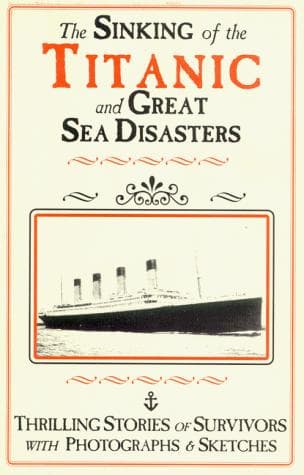
Shipwrecks -- North Atlantic Ocean; Titanic (Steamship)
The reason for all this is found in the modern arrangement of
water-tight steel compartments into which all ships now are divided
and of which the Titanic had fifteen so disposed that half of them,
including the largest, could be flooded without impairing the safety
of the vessel. Probably it was the working of these bulkheads and the
water-tight doors between them as they are supposed to work that saved
the Titanic from foundering when she struck the iceberg.
These bulkheads were of heavy sheet steel and started at the very bottom
of the ship and extended right up to the top side. The openings in the
bulkheads were just about the size of the ordinary doorway, but the
doors did not swing as in a house, but fitted into water-tight grooves
above the opening. They could be released instantly in several ways,
and once closed formed a barrier to the water as solid as the bulkhead
itself.
In the Titanic, as in other great modern ships, these doors were held
in place above the openings by friction clutches. On the bridge was
a switch which connected with an electric magnet at the side of the
bulkhead opening. The turning of this switch caused the magnet to draw
down a heavy weight, which instantly released the friction clutch, and
allowed the door to fall or slide down over the opening in a second.
If, however, through accident the bridge switch was rendered useless the
doors would close automatically in a few seconds. This was arranged by
means of large metal floats at the side of the doorways, which rested
just above the level of the double bottom, and as the water entered
the compartments these floats would rise to it and directly release the
clutch holding the door open. These clutches could also be released by
hand.
It was said of the Titanic that liner compartments could be flooded
as far back or as far forward as the engine room and she would float,
though she might take on a heavy list, or settle considerably at one
end. To provide against just such an accident as she is said to have
encountered she had set back a good distance from the bows an extra
heavy cross partition known as the collision bulkhead, which would
prevent water getting in amidships, even though a good part of her bow
should be torn away. What a ship can stand and still float was shown a
few years ago when the Suevic of the White Star Line went on the rocks
on the British coast. The wreckers could not move the forward part of
her, so they separated her into two sections by the use of dynamite, and
after putting in a temporary bulkhead floated off the after half of
the ship, put it in dry dock and built a new forward part for her. More
recently the battleship Maine, or what was left of her, was floated out
to sea, and kept on top of the water by her water-tight compartments
only.
CHAPTER III. THE MAIDEN VOYAGE OF THE TITANIC
Public-domain text, read in full here on John Shaqi.
Reviews
Reviews
No reviews yet
Be the first to share your thoughts on this work.
Join the Discussion
Join the discussion
Sign in to leave a comment or review.
Sign InorCreate an account