Sinking of the Titanic and Great Sea Disasters — John Shaqi
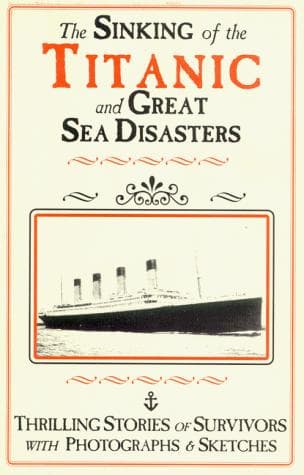
Sinking of the Titanic and Great Sea Disasters
History
Sinking of the Titanic and Great Sea Disasters
Shipwrecks -- North Atlantic Ocean; Titanic (Steamship)
Humphreys said he saw numbers of them smoking cigarettes and joking with
the passengers. They seemed to think that their violation of the rule
against smoking while on duty was a sufficient breach of discipline.
Not one of them attempted to enter a life-boat. Not one of them was
saved.
THE HEROES WHO REMAINED
The women who left the ship; the men who remained--there is little to
choose between them for heroism. Many of the women compelled to take to
the boats would have stayed, had it been possible, to share the fate of
their nearest and dearest, without whom their lives are crippled, broken
and disconsolate.
The heroes who remained would have said, with Grenville. "We have only
done our duty, as a man is bound to do." They sought no palms or crowns
of martyrdom. "They also serve who only stand and wait," and their first
action was merely to step aside and give places in the boats to women
and children, some of whom were too young to comprehend or to remember.
There was no debate as to whether the life of a financier, a master
of business, was rated higher in the scale of values than that of an
ignorant peasant mother. A woman was a woman, whether she wore rags
or pearls. A life was given for a life, with no assertion that one was
priceless and the other comparatively valueless.
Many of those who elected to remain might have escaped. "Chivalry" is a
mild appellation for their conduct. Some of the vaunted knights of old
were desperate cowards by comparison. A fight in the open field, or
jousting in the tournament, did not call out the manhood in a man as did
the waiting till the great ship took the final plunge, in the knowledge
that the seas round about were covered with loving and yearning
witnesses whose own salvation was not assured.
When the roll is called hereafter of those who are "purged of pride
because they died, who know the worth of their days," let the names of
the men who went down with the Titanic be found written there in the
sight of God and men.
THE OBVIOUS LESSON
And, whatever view of the accident be taken, whether the moralist shall
use it to point the text of a solemn or denunciatory warning, or whether
the materialist, swinging to the other extreme, scouts any other theory
than that of the "fortuitous concurrence of atoms," there is scarcely a
thinking mortal who has heard of what happened who has not been deeply
stirred, in the sense of a personal bereavement, to a profound humility
and the conviction of his own insignificance in the greater universal
scheme.
Public-domain text, read in full here on John Shaqi.
Reviews
Reviews
No reviews yet
Be the first to share your thoughts on this work.
Join the Discussion
Join the discussion
Sign in to leave a comment or review.
Sign InorCreate an account