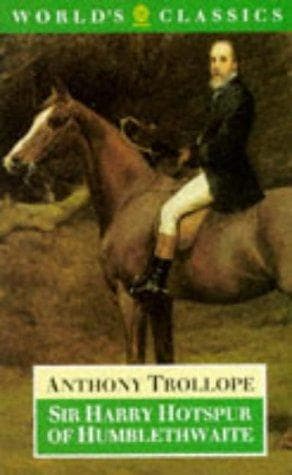
Sir Harry Hotspur of HumblethwaiteTrollope, Anthony
General
Sir Harry Hotspur of Humblethwaite
Trollope, Anthony
Cumberland (England) -- Fiction; Domestic fiction; Fathers and daughters -- Fiction; Inheritance and succession -- Fiction
Sir Harry at this time was vacillating with more of weakness than
would have been expected from a man who had generally been so firm
in the affairs of his life. He had been quite clear about George
Hotspur, when those inquiries of his were first made, and when his
mind had first accepted the notion of Lord Alfred as his chosen
son-in-law. But now he was again at sea. He was so conscious of the
importance of his daughter's case, that he could not bring himself to
be at ease, and to allow himself to expect that the girl would, in
the ordinary course of nature, dispose of her young heart not to her
own injury, as might reasonably be hoped from her temperament, her
character, and her education. He could not protect himself from daily
and hourly thought about it. Her marriage was not as the marriage of
other girls. The house of Hotspur, which had lived and prospered for
so many centuries, was to live and prosper through her; or rather
mainly through the man whom she should choose as her husband. The
girl was all-important now, but when she should have once disposed of
herself her importance would be almost at an end. Sir Harry had in
the recess of his mind almost a conviction that, although the thing
was of such utmost moment, it would be better for him, better for
them all, better for the Hotspurs, that the matter should be allowed
to arrange itself than that there should be any special judgment used
in selection. He almost believed that his girl should be left to
herself, as are other girls. But the thing was of such moment that he
could not save himself from having it always before his eyes.
And yet he knew not what to do; nor was there any aid forthcoming
from Lady Elizabeth. He had tried his hand at the choice of a proper
husband, and his daughter would have none of the man so chosen. So
he had brought her up to London, and thrown her as it were upon the
market. Let Madame Milvodi and the opera-box and the Park horses
do what they could for her. Of course a watch should be kept on
her;--not from doubt of her excellence, but because the thing to be
disposed of was so all-important, and the girl's mode of disposing
of it might, without disgrace or fault on her part, be so vitally
prejudicial to the family!
Public-domain text, read in full here on John Shaqi.
Reviews
Reviews
No reviews yet
Be the first to share your thoughts on this work.
Join the Discussion
Join the discussion
Sign in to leave a comment or review.
Sign InorCreate an account