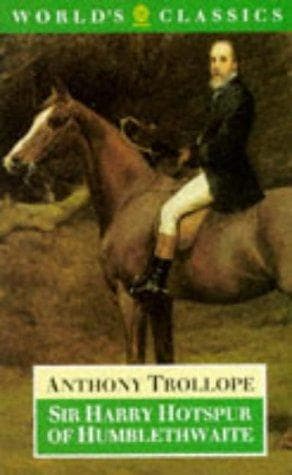
Sir Harry Hotspur of HumblethwaiteTrollope, Anthony
General
Sir Harry Hotspur of Humblethwaite
Trollope, Anthony
Cumberland (England) -- Fiction; Domestic fiction; Fathers and daughters -- Fiction; Inheritance and succession -- Fiction
When twelve months had passed after the death of Sir Harry's son,
George Hotspur had been at Humblethwaite and had gone, and Sir
Harry's will had been made. He had left everything to his daughter,
and had only stipulated that her husband, should she marry, should
take the name of Hotspur. He had decided, that should his daughter,
as was probable, marry within his lifetime, he could then make what
settlements he pleased, even to the changing of the tenor of his
will, should he think fit to change it. Should he die and leave her
still a spinster, he would trust to her in everything. Not being
a man of mystery, he told his wife and his daughter what he had
done,--and what he still thought that he possibly might do; and
being also a man to whom any suspicion of injustice was odious, he
desired his attorney to make known to George Hotspur what had been
settled. And in order that this blow to Cousin George might be
lightened,--Cousin George having in conversation acknowledged to a
few debts,--an immediate present was made to him of four thousand
pounds, and double that amount was assured to him at the Baronet's
death.
The reader may be sure that the Baronet had heard many things
respecting Cousin George which he did not like. To him personally it
would have been infinitely preferable that the title and the estates
should have gone together, than that his own daughter should be a
great heiress. That her outlook into the world was fair and full of
promise of prosperity either way, was clear enough. Twenty thousand
a year would not be necessary to make her a happy woman. And then it
was to him a manifest and a sacred religion that to no man or to no
woman were appointed the high pinnacles of fortune simply that that
man or that woman might enjoy them. They were to be held as thrones
are held, for the benefit of the many. And in the disposition of this
throne, the necessity of making which had fallen upon him from the
loss of his own darling, he had brought himself to think--not of his
daughter's happiness, or to the balance of which, in her possessing
or not possessing the property, he could venture on no prophecy,--but
of the welfare of all those who might measure their weal or woe from
the manner in which the duties of this high place were administered.
He would fain that there should still have been a Sir Harry or a Sir
George Hotspur of Humblethwaite; but he found that his duty required
him to make the other arrangement.
Public-domain text, read in full here on John Shaqi.
Reviews
Reviews
No reviews yet
Be the first to share your thoughts on this work.
Join the Discussion
Join the discussion
Sign in to leave a comment or review.
Sign InorCreate an account