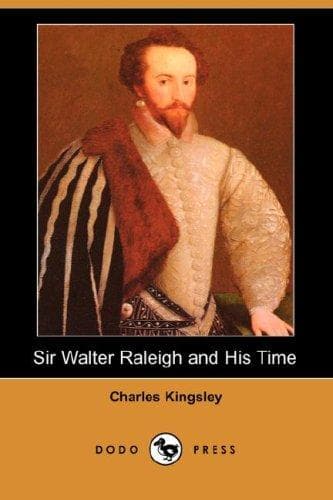
Great Britain -- History; Raleigh, Walter, Sir, 1552?-1618
Into such a world as this goes forth young Raleigh, his heart full of
chivalrous worship for England’s tutelary genius, his brain aflame with
the true miracles of the new-found Hesperides, full of vague hopes, vast
imaginations, and consciousness of enormous power. And yet he is no
wayward dreamer, unfit for this work-day world. With a vein of song
‘most lofty, insolent, and passionate,’ indeed unable to see aught
without a poetic glow over the whole, he is eminently practical,
contented to begin at the beginning that he may end at the end; one who
could ‘toil terribly,’ ‘who always laboured at the matter in hand as if
he were born only for that.’ Accordingly, he sets to work faithfully and
stoutly, to learn his trade of soldiering, and learns it in silence and
obscurity. He shares (it seems) in the retreat at Moncontour, and is by
at the death of Condé, and toils on for five years, marching and
skirmishing, smoking the enemy out of mountain-caves in Languedoc, and
all the wild work of war. During the San Bartholomew massacre we hear
nothing of him; perhaps he took refuge with Sidney and others in
Walsingham’s house. No records of these years remain, save a few
scattered reminiscences in his works, which mark the shrewd, observant
eye of the future statesman.
When he returned we know not. We trace him, in 1576, by some verses
prefixed to Gascoigne’s satire, the ‘Steele Glass,’ solid, stately,
epigrammatic, ‘by Walter Rawley of the Middle Temple.’ The style is his;
spelling of names matters nought in days in which a man would spell his
own name three different ways in one document.
Gascoigne, like Raleigh, knew Lord Grey of Wilton, and most men about
town too; and had been a soldier abroad, like Raleigh, probably with him.
It seems to have been the fashion for young idlers to lodge among the
Templars; indeed, toward the end of the century, they had to be cleared
out, as crowding the wigs and gowns too much; and perhaps proving noisy
neighbours, as Raleigh may have done. To this period may be referred,
probably, his Justice done on Mr. Charles Chester (Ben Jonson’s Carlo
Buffone), ‘a perpetual talker, and made a noise like a drum in a room; so
one time, at a tavern, Raleigh beats him and seals up his mouth, his
upper and nether beard, with hard wax.’ For there is a great laugh in
Raleigh’s heart, a genial contempt of asses; and one that will make him
enemies hereafter: perhaps shorten his days.
Public-domain text, read in full here on John Shaqi.
Reviews
Reviews
No reviews yet
Be the first to share your thoughts on this work.
Join the Discussion
Join the discussion
Sign in to leave a comment or review.
Sign InorCreate an account