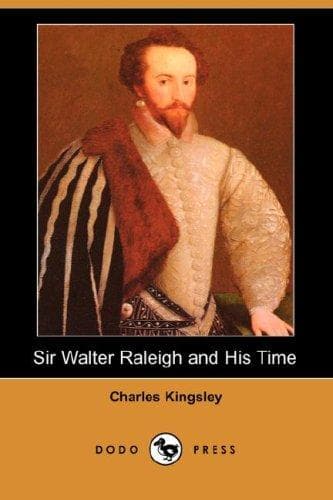
Great Britain -- History; Raleigh, Walter, Sir, 1552?-1618
As for the ‘Alexander and Diana’ affectations, they were the language of
the time: and certainly this generation has no reason to find fault with
them, or with a good deal more of the ‘affectations’ and ‘flattery’ of
Elizabethan times, while it listens complacently night after night ‘to
honourable members’ complimenting not Queen Elizabeth, but Sir Jabesh
Windbag, Fiddle, Faddle, Red-tape, and party with protestations of
deepest respect and fullest confidence in the very speeches in which they
bring accusations of every offence short of high treason—to be
understood, of course, in a ‘parliamentary sense,’ as Mr. Pickwick’s were
in a ‘Pickwickian’ one. If a generation of Knoxes and Mortons, Burleighs
and Raleighs, shall ever arise again, one wonders by what name they will
call the parliamentary morality and parliamentary courtesy of a
generation which has meted out such measure to their ancestors’ failings?
‘But Queen Elizabeth was an old woman then.’ I thank the objector even
for that ‘then’; for it is much nowadays to find any one who believes
that Queen Elizabeth was ever young, or who does not talk of her as if
she was born about seventy years of age covered with rouge and wrinkles.
I will undertake to say that as to the beauty of this woman there is a
greater mass of testimony, and from the very best judges too, than there
is of the beauty of any personage in history; and yet it has become the
fashion now to deny even that. The plain facts seem that she was very
graceful, active, accomplished in all outward manners, of a perfect
figure, and of that style of intellectual beauty, depending on
expression, which attracted (and we trust always will attract) Britons
far more than that merely sensuous loveliness in which no doubt Mary
Stuart far surpassed her. And there seems little doubt that, like many
Englishwomen, she retained her beauty to a very late period in life, not
to mention that she was, in 1592, just at that age of rejuvenescence
which makes many a woman more lovely at sixty than she has been since she
was thirty-five. No doubt, too, she used every artificial means to
preserve her famous complexion; and quite right she was. This beauty of
hers had been a talent, as all beauty is, committed to her by God; it had
been an important element in her great success; men had accepted it as
what beauty of form and expression generally is, an outward and visible
sign of the inward and spiritual grace; and while the inward was
unchanged, what wonder if she tried to preserve the outward? If she was
the same, why should she not try to look the same? And what blame to
those who worshipped her, if, knowing that she was the same, they too
should fancy that she looked the same, the Elizabeth of their youth, and
should talk as if the fair flesh, as well as the fair spirit, was
immortal? Does not every loving husband do so when he forgets the gray
hair and the sunken cheek, and all the wastes of time, and sees the
Public-domain text, read in full here on John Shaqi.
Reviews
Reviews
No reviews yet
Be the first to share your thoughts on this work.
Join the Discussion
Join the discussion
Sign in to leave a comment or review.
Sign InorCreate an account