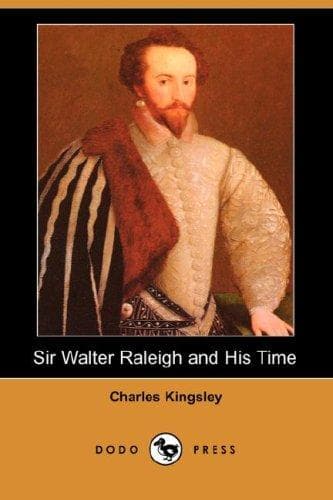
Great Britain -- History; Raleigh, Walter, Sir, 1552?-1618
Having read, I believe, nearly all that has been written on the subject
of this dark ‘Cobham plot,’ I find but one thing come brightly out of the
infinite confusion and mystery, which will never be cleared up till the
day of judgment, and that is Raleigh’s innocence. He, and all England,
and the very men who condemned him, knew that he was innocent. Every
biographer is forced to confess this, more or less, in spite of all
efforts to be what is called ‘impartial.’ So I shall waste no words upon
the matter, only observing that whereas Raleigh is said to have slandered
Cecil to James, in the same way that Cecil had slandered him, one passage
of this Cobham plot disproves utterly such a story, which, after all,
rests (as far as I know) only on hearsay, being ‘spoken of in a
manuscript written by one Buck, secretary to Chancellor Egerton.’ For in
writing to his own wife, in the expectation of immediate death, Raleigh
speaks of Cecil in a very different tone, as one in whom he trusted most,
and who has left him in the hour of need. I ask the reader to peruse
that letter, and say whether any man would write thus, with death and
judgment before his face, of one whom he knew that he had betrayed; or,
indeed, of one who he knew had betrayed him. I see no reason to doubt
that Raleigh kept good faith with Cecil, and that he was ignorant till
after his trial that Cecil was in the plot against him.
I do not care to enter into the tracasseries of this Cobham plot. Every
one knows them; no one can unravel them. The moral and spiritual
significance of the fact is more interesting than all questions as to
Cobham’s lies, Brooke’s lies, Aremberg’s lies, Coke’s lies, James’s
lies:—Let the dead bury their dead. It is the broad aspect of the thing
which is so wonderful; to see how
‘The eagle, towering in his pride of place,
Was by a mousing owl hawked at and killed.’
This is the man who six months ago, perhaps, thought that he and Cecil
were to rule England together, while all else were the puppets whose
wires they pulled. ‘The Lord hath taken him up and dashed him down;’ and
by such means, too, and on such a charge! Betraying his country to
Spain! Absurd—incredible—he would laugh it to scorn: but it is bitter
earnest. There is no escape. True or false, he sees that his enemies
will have his head. It is maddening: a horrible nightmare. He cannot
bear it; he cannot face—so he writes to that beloved wife—‘the scorn, the
taunts, the loss of honour, the cruel words of lawyers.’ He stabs
himself. Read that letter of his, written after the mad blow had been
struck; it is sublime from intensity of agony. The way in which the
chastisement was taken proves how utterly it was needed, ere that proud,
success-swollen, world-entangled heart could be brought right with God.
Public-domain text, read in full here on John Shaqi.
Reviews
Reviews
No reviews yet
Be the first to share your thoughts on this work.
Join the Discussion
Join the discussion
Sign in to leave a comment or review.
Sign InorCreate an account