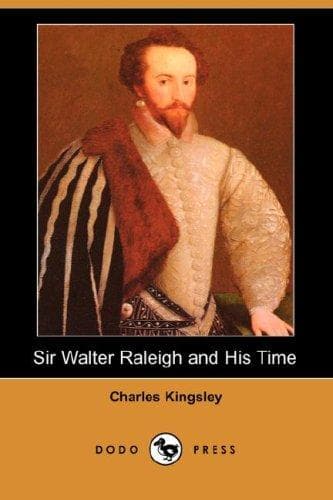
Great Britain -- History; Raleigh, Walter, Sir, 1552?-1618
But of that son, at least, the innocent blood was required. He, too, had
his share in the sin. In Carew Raleigh’s simple and manful petition to
the Commons of England for the restoration of his inheritance we find a
significant fact stated without one word of comment, bitter or otherwise.
At Prince Henry’s death the Sherborne lands had been given again to Carr,
Lord Somerset. To him, too, ‘the whirligig of time brought round its
revenges,’ and he lost them when arraigned and condemned for poisoning
Sir Thomas Overbury. Then Sir John Digby, afterwards Earl of Bristol,
begged Sherborne of the King, and had it. Pembroke (Shakspeare’s
Pembroke) brought young Carew to court, hoping to move the tyrant’s
heart. James saw him and shuddered; perhaps conscience stricken, perhaps
of mere cowardice. ‘He looked like the ghost of his father,’ as he well
might, to that guilty soul. Good Pembroke advised his young kinsman to
travel, which he did till James’s death in the next year. Then coming
over—this is his own story—he asked of Parliament to be restored in
blood, that he might inherit aught that might fall to him in England.
His petition was read twice in the Lords. Whereon ‘King Charles sent Sir
James Fullarton, then of the bed-chamber, to Mr. Raleigh to command him
to come to him; and being brought in, the King, after using him with
great civility, notwithstanding told him plainly that when he was prince
he had promised the Earl of Bristol to secure his title to Sherborne
against the heirs of Sir Walter Raleigh; whereon the earl had given him,
then prince, ten thousand pounds; that now he was bound to make good his
promise, being king; that, therefore, unless he would quit his right and
title to Sherborne, he neither could nor would pass his bill of
restoration.’
Young Raleigh, like a good Englishman, ‘urged,’ he says, ‘the justness of
his cause; that he desired only the liberty of the subject, and to be
left to the law, which was never denied any freeman.’ The King remained
obstinate. His noble brother’s love for the mighty dead weighed nothing
with him, much less justice. Poor young Raleigh was forced to submit.
The act for his restoration was passed, reserving Sherborne for Lord
Bristol, and Charles patched up the affair by allowing to Lady Raleigh
and her son after her a life pension of four hundred a year.
Public-domain text, read in full here on John Shaqi.
Reviews
Reviews
No reviews yet
Be the first to share your thoughts on this work.
Elsewhere in the archive
Join the Discussion
Join the discussion
Sign in to leave a comment or review.
Sign InorCreate an account