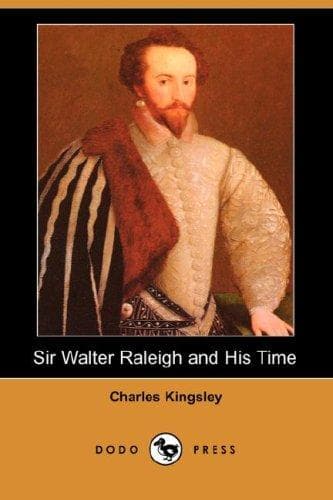
Great Britain -- History; Raleigh, Walter, Sir, 1552?-1618
Young Carew tells his story simply, and without a note of bitterness;
though he professes his intent to range himself and his two sons for the
future ‘under the banner of the Commons of England,’ he may be a royalist
for any word beside. Even where he mentions the awful curse of his
mother, he only alludes to its fulfilment by—‘that which hath happened
since to that royal family is too sad and disastrous for me to repeat,
and yet too visible not to be discerned.’ We can have no doubt that he
tells the exact truth. Indeed the whole story fits Charles’s character
to the smallest details. The want of any real sense of justice, combined
with the false notion of honour; the implacable obstinacy; the contempt
for that law by which alone he held his crown; the combination of
unkingliness in commanding a private interview and shamelessness in
confessing his own meanness—all these are true notes of the man whose
deliberate suicide stands written, a warning to all bad rulers till the
end of time. But he must have been a rogue early in life, and a needy
rogue too. That ten thousand pounds of Lord Bristol’s money should make
many a sentimentalist reconsider—if, indeed, sentimentalists can be made
to reconsider, or even to consider, anything—their notion of him as the
incarnation of pious chivalry.
At least the ten thousand pounds cost Charles dear.
The widow’s curse followed him home. Naseby fight and the Whitehall
scaffold were surely God’s judgment of such deeds, whatever man’s may be.
FOOTNOTES
{87} _North British Review_, No. XLV.—1. ‘Life of Sir Walter Raleigh.’
By P. Fraser Tytler, F.R.S. London, 1853.—2. ‘Raleigh’s Discovery of
Guiana.’ Edited by Sir Robert Schomburgk (Hakluyt Society), 1848.—3.
‘Lord Bacon and Sir Walter Raleigh.’ By M. Napier. Cambridge, 1853.—4.
‘Raleigh’s Works, with Lives by Oldys and Birch.’ Oxford, 1829—5.
‘Bishop Goodman’s History of his own Times.’ London, 1839.
{95} I especially entreat readers’ attention to two articles in
vindication of the morals of Queen Elizabeth, in ‘Fraser’s Magazine’ of
1854; to one in the ‘Westminster’ of 1854, on Mary Stuart; and one in the
same of 1852, on England’s Forgotten Worthies, by a pen now happily well
known in English literature, Mr. Anthony Froude’s.
{138} Since this was written, a similar Amazonian bodyguard has been
discovered, I hear, in Pegu.
{155} It is to be found in a MS. of 1596.
Public-domain text, read in full here on John Shaqi.
Reviews
Reviews
No reviews yet
Be the first to share your thoughts on this work.
Elsewhere in the archive
Join the Discussion
Join the discussion
Sign in to leave a comment or review.
Sign InorCreate an account