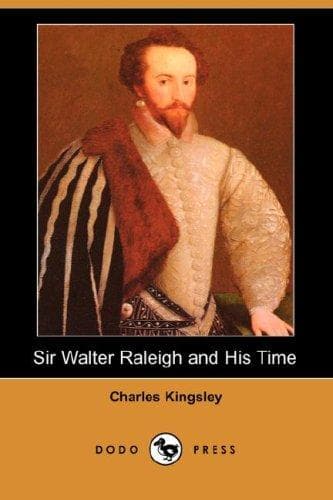
Great Britain -- History; Raleigh, Walter, Sir, 1552?-1618
Born in 1552, his young life has sprung up and grown with the young life
of England. The earliest fact, perhaps, which he can recollect is the
flash of joy on every face which proclaims that Mary Tudor is dead, and
Elizabeth reigns at last. As he grows, the young man sees all the hope
and adoration of the English people centre in that wondrous maid, and his
own centre in her likewise. He had been base had he been otherwise. She
comes to the throne with such a prestige as never sovereign came since
the days when Isaiah sang his pæan over young Hezekiah’s accession.
Young, learned, witty, beautiful (as with such a father and mother she
could not help being), with an expression of countenance remarkable (I
speak of those early days) rather for its tenderness and intellectual
depth than its strength, she comes forward as the champion of the
Reformed Faith, the interpretress of the will and conscience of the
people of England—herself persecuted all but to the death, and purified
by affliction, like gold tried in the fire. She gathers round her, one
by one, young men of promise, and trains them herself to their work. And
they fulfil it, and serve her, and grow gray-headed in her service,
working as faithfully, as righteously, as patriotically, as men ever
worked on earth. They are her ‘favourites’; because they are men who
deserve favour; men who count not their own lives dear to themselves for
the sake of the queen and of that commonweal which their hearts and
reasons tell them is one with her. They are still men, though; and some
of them have their grudgings and envyings against each other: she keeps
the balance even between them, on the whole, skilfully, gently, justly,
in spite of weaknesses and prejudices, without which she had been more
than human. Some have their conceited hopes of marrying her, becoming
her masters. She rebukes and pardons. ‘Out of the dust I took you, sir!
go and do your duty, humbly and rationally, henceforth, or into the dust
I trample you again!’ And they reconsider themselves, and obey. But
many, or most of them, are new men, country gentlemen, and younger sons.
She will follow her father’s plan, of keeping down the overgrown feudal
princes, who, though brought low by the wars of the Roses, are still
strong enough to throw everything into confusion by resisting at once the
Crown and Commons. Proud nobles reply by rebellion, come down southwards
with ignorant Popish henchmen at their backs; will restore Popery, marry
the Queen of Scots, make the middle class and the majority submit to the
feudal lords and the minority. Elizabeth, with her ‘aristocracy of
genius,’ is too strong for them: the people’s heart is with her, and not
with dukes. Each mine only blows up its diggers; and there are many dry
eyes at their ruin. Her people ask her to marry. She answers gently,
proudly, eloquently: ‘She is married—the people of England is her
husband. She has vowed it.’ And yet there is a tone of sadness in that
Public-domain text, read in full here on John Shaqi.
Reviews
Reviews
No reviews yet
Be the first to share your thoughts on this work.
Join the Discussion
Join the discussion
Sign in to leave a comment or review.
Sign InorCreate an account