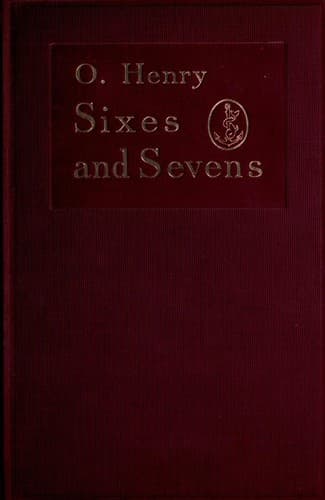
American fiction -- 20th century; Short stories, American
“Sam,” said old man Ellison, stroking his white whiskers with a
tremulous hand, “would you mind getting the guitar and playing that
‘_Huile, huile, palomita_’ piece once or twice? It always seems to be
kind of soothing and comforting when a man’s tired and fagged out.”
There is no more to be said, except that the title of the story is
wrong. It should have been called “The Last of the Barons.” There never
will be an end to the troubadours; and now and then it does seem that
the jingle of their guitars will drown the sound of the muffled blows
of the pickaxes and trip hammers of all the Workers in the world.
II.
THE SLEUTHS
In The Big City a man will disappear with the suddenness and
completeness of the flame of a candle that is blown out. All the
agencies of inquisition—the hounds of the trail, the sleuths of the
city’s labyrinths, the closet detectives of theory and induction—will
be invoked to the search. Most often the man’s face will be seen no
more. Sometimes he will reappear in Sheboygan or in the wilds of Terre
Haute, calling himself one of the synonyms of “Smith,” and without
memory of events up to a certain time, including his grocer’s bill.
Sometimes it will be found, after dragging the rivers, and polling the
restaurants to see if he may be waiting for a well-done sirloin, that
he has moved next door.
This snuffing out of a human being like the erasure of a chalk man from
a blackboard is one of the most impressive themes in dramaturgy.
The case of Mary Snyder, in point, should not be without interest.
A man of middle age, of the name of Meeks, came from the West to New
York to find his sister, Mrs. Mary Snyder, a widow, aged fifty-two, who
had been living for a year in a tenement house in a crowded
neighbourhood.
At her address he was told that Mary Snyder had moved away longer than
a month before. No one could tell him her new address.
On coming out Mr. Meeks addressed a policeman who was standing on the
corner, and explained his dilemma.
“My sister is very poor,” he said, “and I am anxious to find her. I
have recently made quite a lot of money in a lead mine, and I want her
to share my prosperity. There is no use in advertising her, because she
cannot read.”
The policeman pulled his moustache and looked so thoughtful and mighty
that Meeks could almost feel the joyful tears of his sister Mary
dropping upon his bright blue tie.
“You go down in the Canal Street neighbourhood,” said the policeman,
“and get a job drivin’ the biggest dray you can find. There’s old women
always gettin’ knocked over by drays down there. You might see ’er
among ’em. If you don’t want to do that you better go ’round to
headquarters and get ’em to put a fly cop onto the dame.”
At police headquarters, Meeks received ready assistance. A general
alarm was sent out, and copies of a photograph of Mary Snyder that her
brother had were distributed among the stations. In Mulberry Street the
chief assigned Detective Mullins to the case.
Public-domain text, read in full here on John Shaqi.
Reviews
Reviews
No reviews yet
Be the first to share your thoughts on this work.
Join the Discussion
Join the discussion
Sign in to leave a comment or review.
Sign InorCreate an account