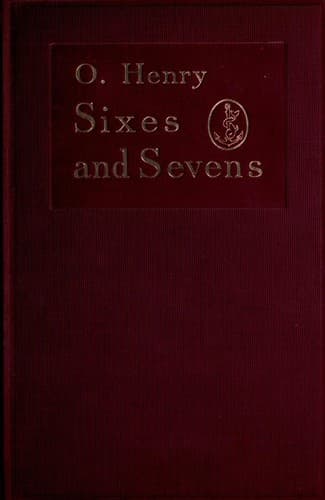
American fiction -- 20th century; Short stories, American
Nearly a year afterward—after many camping grounds and many hundreds of
miles guarded and defended—Lieutenant Manning, with almost the same
detachment of men, was sent to a point only a few miles below their old
camp on the river to look after some smuggling there. One afternoon,
while they were riding through a dense mesquite flat, they came upon a
patch of open hog-wallow prairie. There they rode upon the scene of an
unwritten tragedy.
In a big hog-wallow lay the skeletons of three Mexicans. Their clothing
alone served to identify them. The largest of the figures had once been
Sebastiano Saldar. His great, costly sombrero, heavy with gold
ornamentation—a hat famous all along the Rio Grande—lay there pierced
by three bullets. Along the ridge of the hog-wallow rested the rusting
Winchesters of the Mexicans—all pointing in the same direction.
The rangers rode in that direction for fifty yards. There, in a little
depression of the ground, with his rifle still bearing upon the three,
lay another skeleton. It had been a battle of extermination. There was
nothing to identify the solitary defender. His clothing—such as the
elements had left distinguishable—seemed to be of the kind that any
ranchman or cowboy might have worn.
“Some cow-puncher,” said Manning, “that they caught out alone. Good
boy! He put up a dandy scrap before they got him. So that’s why we
didn’t hear from Don Sebastiano any more!”
And then, from beneath the weather-beaten rags of the dead man, there
wriggled out a horned frog with a faded red ribbon around its neck, and
sat upon the shoulder of its long quiet master. Mutely it told the
story of the untried youth and the swift “paint” pony—how they had
outstripped all their comrades that day in the pursuit of the Mexican
raiders, and how the boy had gone down upholding the honour of the
company.
The ranger troop herded close, and a simultaneous wild yell arose from
their lips. The outburst was at once a dirge, an apology, an epitaph,
and a pæan of triumph. A strange requiem, you may say, over the body of
a fallen, comrade; but if Jimmy Hayes could have heard it he would have
understood.
XII.
THE DOOR OF UNREST
I sat an hour by sun, in the editor’s room of the Montopolis _Weekly
Bugle_. I was the editor.
The saffron rays of the declining sunlight filtered through the
cornstalks in Micajah Widdup’s garden-patch, and cast an amber glory
upon my paste-pot. I sat at the editorial desk in my non-rotary
revolving chair, and prepared my editorial against the oligarchies. The
room, with its one window, was already a prey to the twilight. One by
one, with my trenchant sentences, I lopped off the heads of the
political hydra, while I listened, full of kindly peace, to the
home-coming cow-bells and wondered what Mrs. Flanagan was going to have
for supper.
Public-domain text, read in full here on John Shaqi.
Reviews
Reviews
No reviews yet
Be the first to share your thoughts on this work.
Join the Discussion
Join the discussion
Sign in to leave a comment or review.
Sign InorCreate an account