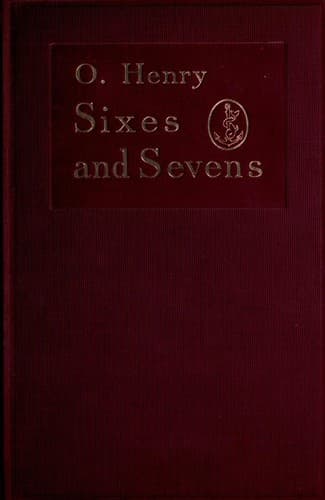
American fiction -- 20th century; Short stories, American
“A great deal?” said the miller. “Well, that depends. There is plenty
unless you want to buy the moon or something equally expensive.”
“Would it cost very, very much,” asked Aglaia, who had always counted
her dimes so carefully, “to send a telegram to Atlanta?”
“Ah,” said Father Abram, with a little sigh, “I see. You want to ask
Ralph to come.”
Aglaia looked up at him with a tender smile.
“I want to ask him to wait,” she said. “I have just found my father,
and I want it to be just we two for a while. I want to tell him he will
have to wait.”
XVII.
NEW YORK BY CAMP FIRE LIGHT
Away out in the Creek Nation we learned things about New York.
We were on a hunting trip, and were camped one night on the bank of a
little stream. Bud Kingsbury was our skilled hunter and guide, and it
was from his lips that we had explanations of Manhattan and the queer
folks that inhabit it. Bud had once spent a month in the metropolis,
and a week or two at other times, and he was pleased to discourse to us
of what he had seen.
Fifty yards away from our camp was pitched the teepee of a wandering
family of Indians that had come up and settled there for the night. An
old, old Indian woman was trying to build a fire under an iron pot hung
upon three sticks.
Bud went over to her assistance, and soon had her fire going. When he
came back we complimented him playfully upon his gallantry.
“Oh,” said Bud, “don’t mention it. It’s a way I have. Whenever I see a
lady trying to cook things in a pot and having trouble I always go to
the rescue. I done the same thing once in a high-toned house in. New
York City. Heap big society teepee on Fifth Avenue. That Injun lady
kind of recalled it to my mind. Yes, I endeavours to be polite and help
the ladies out.”
The camp demanded the particulars.
“I was manager of the Triangle B Ranch in the Panhandle,” said Bud. “It
was owned at that time by old man Sterling, of New York. He wanted to
sell out, and he wrote for me to come on to New York and explain the
ranch to the syndicate that wanted to buy. So I sends to Fort Worth and
has a forty dollar suit of clothes made, and hits the trail for the big
village.
“Well, when I got there, old man Sterling and his outfit certainly laid
themselves out to be agreeable. We had business and pleasure so mixed
up that you couldn’t tell whether it was a treat or a trade half the
time. We had trolley rides, and cigars, and theatre round-ups, and
rubber parties.”
“Rubber parties?” said a listener, inquiringly.
Public-domain text, read in full here on John Shaqi.
Reviews
Reviews
No reviews yet
Be the first to share your thoughts on this work.
Elsewhere in the archive
Join the Discussion
Join the discussion
Sign in to leave a comment or review.
Sign InorCreate an account