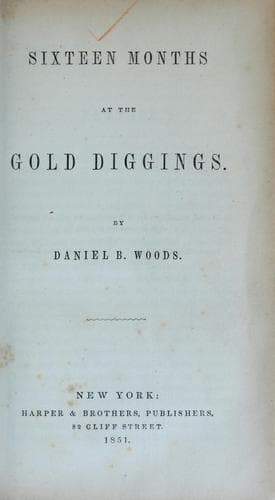
Sixteen months at the gold diggingsWoods, Daniel B.
History
Sixteen months at the gold diggings
Woods, Daniel B.
California -- Description and travel; California -- Gold discoveries; Frontier and pioneer life -- California
July 10th. We made $3 each to-day. This life of severe hardship and
exposure has affected my health. Our diet consists of hard bread, flour,
which we eat half cooked, and salt pork, with occasionally a salmon
which we purchase of the Indians. Vegetables are not to be procured. Our
feet are wet all day, while a hot sun shines down upon our heads, and
the very air parches the skin like the hot air of an oven. Our drinking
water comes down to us thoroughly impregnated with the mineral
substances washed through the thousand cradles above us. After our days
of labor, exhausted and faint, we _retire_--if this word may be applied
to the simple act of lying down in our clothes--robbing our feet of
their boots to make a pillow of them, and wrapping our blankets about
us, on a bed of pine boughs, or on the ground, beneath the clear,
bright stars of night. Near morning there is always a change in the
temperature of the air, and several blankets become necessary. Then the
feet and the hands of the novice in this business become blistered and
lame, and the limbs are stiff. Besides all these causes of sickness, the
anxieties and cares which wear away the life of so many men who leave
their families to come to this land of gold, contribute, in no small
degree, to this same result. It may with truth be said, “the whole head
is sick, and the whole heart faint.” I have to-day removed to the top of
the hill above the encampment, and beneath a large oak-tree, for the
benefit of a cooler air and shade during the intense heat of noon.
Aug. 20th. After my last date I was prostrated at once by the
acclimating disease of the country, and rendered as helpless as a child.
All day and all night long I was alone under my oak, and without those
kind attentions so necessary in sickness, and which can not be had here.
I was reduced to a very low state, with but little hope, under the
circumstances, of recovery. It did seem hard to lie down to die there,
and to think that I was no more to see my beloved family. Yet I feared
not to die. Indeed, I marked off the spot under the oak where my grave
should be, and prayed for submission to God’s righteous will, and that
his love would protect and bless those dear to me.
The lines of an Englishman, addressed, as he was dying at the mines, “to
a gold coin,” vividly described my feelings at that time:
“For thee, for thee, vile yellow slave,
I left a heart that loved me true!
I crossed the tedious ocean-wave,
To roam in climes unkind and new.
The cold wind of the stranger blew
Chill on my withered heart--the grave
Dark and untimely met my view--
And all for thee, vile yellow slave!”
Public-domain text, read in full here on John Shaqi.
Reviews
Reviews
No reviews yet
Be the first to share your thoughts on this work.
Join the Discussion
Join the discussion
Sign in to leave a comment or review.
Sign InorCreate an account