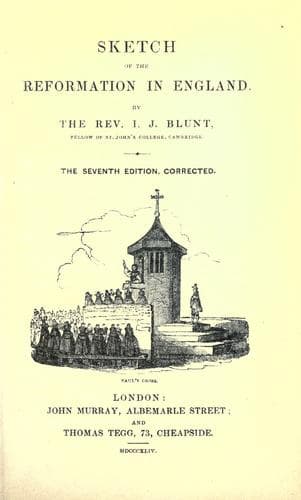
Sketch of the Reformation in EnglandBlunt, John J. (John James)
History
Sketch of the Reformation in England
Blunt, John J. (John James)
Great Britain -- Church history; Reformation -- England
With these and other words to the same effect, the king gave him his
ring, which in case of extremity he might produce at the council, and
by virtue of it appeal to Cæsar. He did so, and thus Cranmer escaped
out of their hands. But all had not the same friend, nor therefore
the same fortune; for it is to be observed, that the commissioners
appointed to carry the Six Articles into execution did not confine
their investigations to offences coming directly under the act, but,
erecting themselves into a kind of inquisition-general, they took
cognisance of all that was done after a manner which they called
heresy, whatever it might be; and neglect of confession in Lent,
absence from church, forbearing to creep to the cross on Good Friday,
neglecting the use of the rosary, eating meat at interdicted seasons,
and the like, were all misdemeanors fetched within the compass of this
cruel dragnet of the Six Articles. Accordingly, the prisons of London
were gorged with culprits;[309] for now an opportunity was afforded of
raking up old suspicions, and putting all upon their purgation. Many
are the affecting stories of those days which have come down to us;
glimpses of the domestic troubles of an age called so loudly to bear
the cross. The meetings by stealth amongst the friends of the common
cause, amongst the brethren (as they named themselves, after the manner
of the early Christians); a fraternity, for instance, of students at
Oxford, not, like Wesley’s little society in the same place, taking
joyfully the persecution of a tolerant age, which conferred distinction
at an easy rate; but adopting every precaution to walk unseen, and
all not enough; trusting their lives to each other’s hands; abetting
the escape; supplying the disguise; recommending the fugitive to
some distant and less suspected brother; kneeling with him before he
went his way, to beg God’s blessing upon his enterprise, bidding him
farewell with sorrowful heart and sad foreboding that they should see
his face in the flesh no more; baffling the inquiry of the pursuer;
risking the character and fate of an accomplice; braving the rack
rather than betray the innocent blood; dying by inches in the dungeon,
the feet in the stocks, or the neck and legs trussed together by some
devilish engine (“the devil on the neck”) which contracted with the
writhings of the sufferer, till his frame was crushed within its iron
grasp;[310]--these are some of the silent horrors of those dreadful
days, of which it is impossible to read, without thankfulness to
Providence that our lot has been cast on times of greater charity; and
without confessing that, grievous as the evil is of capricious division
upon religious questions, it is far less than that of barbarous
coercion to unanimity; and bad as the spirit is, wherever it exists,
which would preach Christ only of envy and strife, it is after all
better than that which would make a way for his reception by fire from
heaven.
Public-domain text, read in full here on John Shaqi.
Reviews
Reviews
No reviews yet
Be the first to share your thoughts on this work.
Elsewhere in the archive
Join the Discussion
Join the discussion
Sign in to leave a comment or review.
Sign InorCreate an account