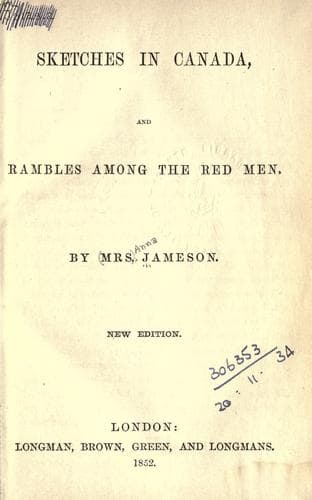
Sketches in Canada, and rambles among the red menJameson, Mrs. (Anna)
History
Sketches in Canada, and rambles among the red men
Jameson, Mrs. (Anna)
Indians of North America -- Canada; Ontario -- Description and travel
Of this Pontiac you have read, no doubt, in various books of travels and
anecdotes of Indian chiefs. But it is one thing to read of these events
by an English fireside, where the features of the scene--the forest
wilds echoing to the war-whoop--the painted warriors--the very words
scalping, tomahawking, bring no definite meaning to the mind, only a
vague horror;--and quite _another_ thing to recall them here on the
spot, arrayed in all their dread yet picturesque reality. Pontiac is the
hero _par excellence_ of all these regions; and in all the histories of
Detroit, when Detroit becomes a great capital of the west, he will
figure like Caractacus or Arminius in the Roman history. The English
contemporaries call him king and emperor of the Indians; but there is
absolutely no sovereignty among these people. Pontiac was merely a war
chief, chosen in the usual way, but exercising a more than usual
influence, not by mere bravery--the universal savage virtue--but by
talents of a rarer kind; a power of reflection and combination rarely
met with in the character of the red warrior. Pontiac was a man of
genius, and would have ruled his fellow-men under any circumstances, and
in any country. He formed a project similar to that which Tecumseh
entertained fifty years later. He united all the north-western tribes of
Ottawas, Chippewas, and Pottowottomies, in one great confederacy against
the British, "the dogs in red coats;" and had very nearly caused the
overthrow, at least the temporary overthrow of our power. He had planned
a simultaneous attack on all the trading posts in the possession of the
English, and so far succeeded that ten of these forts were surprised
about the same time, and all the English soldiers and traders massacred,
while the French were spared. Before any tidings of these horrors and
outrages could reach Detroit, Pontiac was here in friendly guise, and
all his measures admirably arranged for taking this fort also by
stratagem, and murdering every Englishman within it. All had been lost,
if a poor Indian woman, who had received much kindness from the family
of the commandant (Major Gladwyn), had not revealed the danger. I do not
yet quite understand why Major Gladwyn, on the discovery of Pontiac's
treachery, and having him in his power, did not make him and his whole
band prisoners; such a stroke would have ended, or rather it would have
prevented, the war. But it must be remembered that Major Gladwyn was
ignorant of the systematic plan of extermination adopted by Pontiac; the
news of the massacres at the upper forts had not reached him; he knew of
nothing but the attempt on himself, and from motives of humanity or
magnanimity he suffered them to leave the fort and go free. No sooner
were they on the outside of the palisades, than they set up the war-yell
"like so many devils," as a bystander expressed it, and turned and
discharged their rifles on the garrison. The war, thus savagely
Public-domain text, read in full here on John Shaqi.
Reviews
Reviews
No reviews yet
Be the first to share your thoughts on this work.
Elsewhere in the archive
Join the Discussion
Join the discussion
Sign in to leave a comment or review.
Sign InorCreate an account