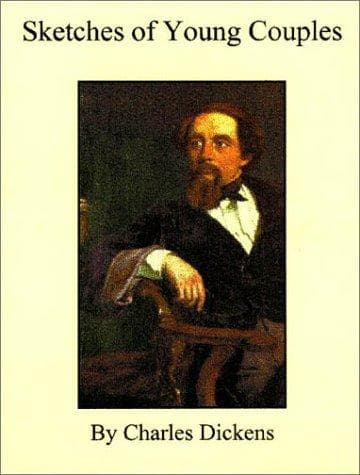
Couples -- England; England -- Social life and customs -- 19th century
But the little housemaid is awakened from her reverie, for forth from the
door of the magical corner house there runs towards her, all fluttering
in smart new dress and streaming ribands, her friend Jane Adams, who
comes all out of breath to redeem a solemn promise of taking her in,
under cover of the confusion, to see the breakfast table spread forth in
state, and—sight of sights!—her young mistress ready dressed for church.
And there, in good truth, when they have stolen up-stairs on tip-toe and
edged themselves in at the chamber-door—there is Miss Emma ‘looking like
the sweetest picter,’ in a white chip bonnet and orange flowers, and all
other elegancies becoming a bride, (with the make, shape, and quality of
every article of which the girl is perfectly familiar in one moment, and
never forgets to her dying day)—and there is Miss Emma’s mamma in tears,
and Miss Emma’s papa comforting her, and saying how that of course she
has been long looking forward to this, and how happy she ought to be—and
there too is Miss Emma’s sister with her arms round her neck, and the
other bridesmaid all smiles and tears, quieting the children, who would
cry more but that they are so finely dressed, and yet sob for fear sister
Emma should be taken away—and it is all so affecting, that the two
servant-girls cry more than anybody; and Jane Adams, sitting down upon
the stairs, when they have crept away, declares that her legs tremble so
that she don’t know what to do, and that she will say for Miss Emma, that
she never had a hasty word from her, and that she does hope and pray she
may be happy.
Public-domain text, read in full here on John Shaqi.
Reviews
Reviews
No reviews yet
Be the first to share your thoughts on this work.
Join the Discussion
Join the discussion
Sign in to leave a comment or review.
Sign InorCreate an account