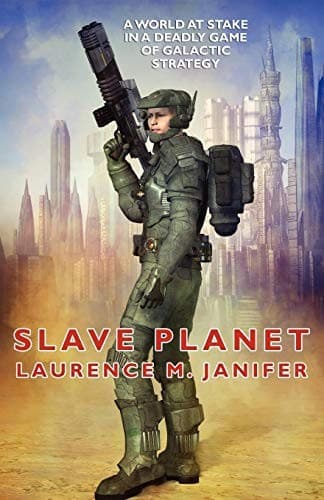
Life on other planets -- Fiction; Science fiction; Slavery -- Fiction
The Alberts had to be trained. The Alberts had to be disciplined. The
men had to work with them. The men were forbidden to leave the planet.
And who were the slaves?
That, Dodd told himself cloudily, was far from an easy decision.
Everything not compulsory was forbidden. Even the parties were
forbidden ... though it was always possible to find one. Dodd had
avoided them completely, afraid now of another breakdown, this time in
public. He had not seen Greta or called her (though he had her number
now): he had stayed alone as much as possible.
He had no idea what had happened to him: and that added to his fright
and to his fear of a recurrence.
But Albin, he knew, was having his fun, and so were others. The older
men, it seemed, devoted themselves to running the place, to raising
their families and giving good advice, to keeping production up and
costs down.
The younger men had fun.
Dodd had thought of marriage. (Now, it was no more than a memory,
a hope he might once have had. Now, the end had come: there was no
marriage. There was no life. Only the idea of hope remained.) He had
never had the vestige of a real female image in his mind. Sometimes he
had told himself to be more out-going, to meet more women--but, then,
how did a man meet women?
He had fun.
And Dodd had never enjoyed that particular brand of fun--Albin's brand.
There was a Social, an acceptable party that would get him into no
trouble, in Building One. Dodd felt like lying down and letting the day
drain out of him into the comforting mattress there in his room. He
felt like relaxing in his own company--and that, he saw suddenly, was
going to mean drinking.
He could see the future unroll before him. He could see the first
drink, and the tenth. Because drink was an escape, and he needed some
escape from the world he was pledged to uphold, the world of slavery.
He could not afford to drink again.
So, naturally, he was getting ready to go to the Social. Albin would
be there, undoubtedly, some of the older men would be there--and
a scattering of women would be there, too. (He remembered himself
thinking, long ago before such a party: Tonight might be the night.) He
shaved very carefully, faithful to memory, dressed in the best he could
find in his closet, and went out, heading for the elevator.
Tonight might be the night--but it made no difference, not any longer.
Public-domain text, read in full here on John Shaqi.
Reviews
Reviews
No reviews yet
Be the first to share your thoughts on this work.
Join the Discussion
Join the discussion
Sign in to leave a comment or review.
Sign InorCreate an account