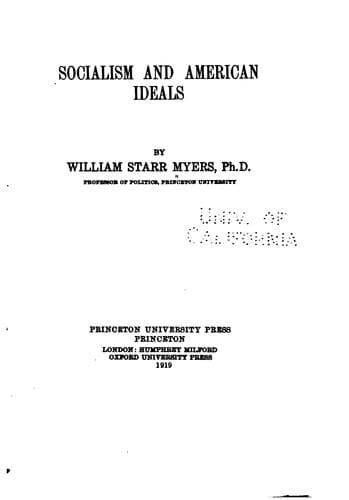
Perhaps no one would suffer more from a policy of government ownership
than the present force of railroad employees in the United States. They
have won their present positions for the most part by individual
achievement, but their future advancement would depend not upon the
continued successful handling of their work, but upon either the
injustice of political favoritism or the undiscriminating rules of the
Civil Service. That some of the employees have not failed to grasp the
political possibilities is shown by my own recent experience upon a
train between Philadelphia and New York. I had a difference with one of
the train crew who was collecting the tickets in my car, and which was
caused by carelessness and indifference on his part. The employee
finally answered my protests by remarking--"Oh well, we don't care so
long as Woodrow Wilson is in the White House." The truth or untruth of
this statement is not the important thing, but the fact that he made it.
The personnel would tend steadily to deteriorate in efficiency. The
successful government employee is the one who follows most closely the
beaten track of precedent and past experience. If he departs from this
track, he inevitably arouses the opposition of his fellow-employees or
of the unthinking part of the public, who usually desire no change. He
also takes all the risks of experiment and if he succeeds, the rewards
are uncertain and small; if he fails, he personally bears all the
consequences. This is the reason for the tendency toward steady
deterioration on the part of all public service. Employees of the State
must follow the path of absolute conformity to the past. This deadens
individual initiative, ambition and inventiveness.
At this point it would be well to repeat the penetrating question
recently asked by Mr. Otto H. Kahn in the course of an address before
the American Bankers Association in Chicago. Said Mr. Kahn--"Now, you
and I, who are trained in business, have all we can do to conduct our
respective concerns and personal affairs with a fair measure of success.
On what grounds, then, can it be assumed that by becoming endowed with
the dignity of a governmental appointment, men of average or even much
more than average ability will develop the capacity to run successfully
the huge and complex business undertakings which the devotees of
paternalism would place in their charge?"
Furthermore, the plant and its upkeep would be subject to political
influence and objects. Just as we have needlessly expensive or even
useless post office buildings, harbor improvements and other works of
national cost built as the result of sectional log-rolling of
Congressional politicians, so probably we would have railroad stations,
tracks, subway crossings, and service in general offered not from the
standpoint of efficiency and public service, but as indirect campaign
contributions to needy Congressional candidates for re-election.
Public-domain text, read in full here on John Shaqi.
Reviews
Reviews
No reviews yet
Be the first to share your thoughts on this work.
Join the Discussion
Join the discussion
Sign in to leave a comment or review.
Sign InorCreate an account