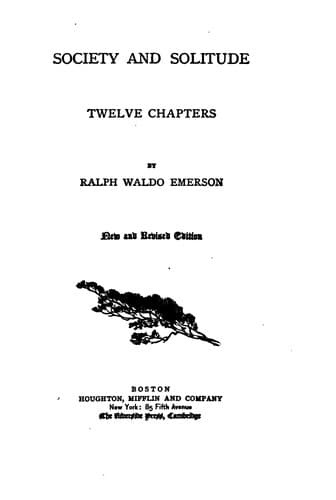
Society and solitude: Twelve chaptersEmerson, Ralph Waldo
Philosophy
Society and solitude: Twelve chapters
Emerson, Ralph Waldo
American essays -- 19th century
The fundamental fact in our metaphysic constitution is the
correspondence of man to the world, so that every change in that
writes a record in the mind. The mind yields sympathetically to the
tendencies or law which stream through things, and make the order of
nature; and in the perfection of this correspondence or expressiveness,
the health and force of man consist. If we follow this hint into our
intellectual education, we shall find that it is not propositions, not
new dogmas and a logical exposition of the world, that are our first
need; but to watch and tenderly cherish the intellectual and moral
sensibilities, those fountains of right thought, and woo them to stay
and make their home with us. Whilst they abide with us, we shall not
think amiss. Our perception far outruns our talent. We bring a welcome
to the highest lessons of religion and of poetry out of all proportion
beyond our skill to teach. And, further, the great hearing and sympathy
of men is more true and wise than their speaking is wont to be. A deep
sympathy is what we require for any student of the mind; for the chief
difference between man and man is a difference of impressionability.
Aristotle, or Bacon, or Kant propound some maxim which is the key-note
of philosophy thenceforward. But I am more interested to know, that,
when at last they have hurled out their grand word, it is only some
familiar experience of every man in the street. If it be not, it will
never be heard of again.
Ah! if one could keep this sensibility, and live in the happy sufficing
present, and find the day and its cheap means contenting, which
only ask receptivity in you, and no strained exertion and cankering
ambition, overstimulating to be at the head of your class and the head
of society, and to have distinction and laurels and consumption! We are
not strong by our power to penetrate, but by our relatedness. The world
is enlarged for us, not by new objects, but by finding more affinities
and potencies in those we have.
Public-domain text, read in full here on John Shaqi.
Reviews
Reviews
No reviews yet
Be the first to share your thoughts on this work.
Elsewhere in the archive
Join the Discussion
Join the discussion
Sign in to leave a comment or review.
Sign InorCreate an account