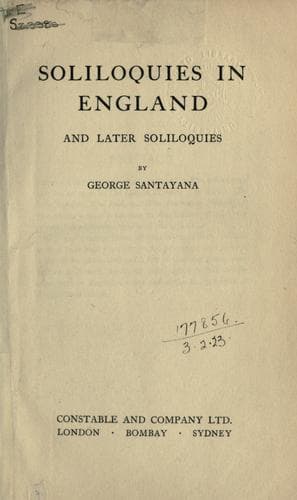
Soliloquies in England, and Later SoliloquiesSantayana, George
Philosophy
Soliloquies in England, and Later Soliloquies
Santayana, George
American essays -- 20th century
So musing, I suddenly heard a once familiar strain, now long despised
and out of favour, the old tune of _Tipperary_. In a coffee-house
frequented at that hour some wounded officers from the hospital at
Somerville were singing it, standing near the bar; they were breaking
all rules, both of surgeons and of epicures, and were having champagne
in the morning. And good reason they had for it. They were reprieved,
they should never have to go back to the front, their friends--such as
were left--would all come home alive. Instinctively the old grumbling,
good-natured, sentimental song, which they used to sing when they
first joined, came again into their minds. It had been indeed a long,
long way to Tipperary. But they had trudged on and had come round full
circle; they were in Tipperary at last.
I wonder what they think _Tipperary_ means--for this is a mystical
song. Probably they are willing to leave it vague, as they do their
notions of honour or happiness or heaven. Their soldiering is over;
they remember, with a strange proud grief, their comrades who died to
make this day possible, hardly believing that it ever would come; they
are overjoyed, yet half ashamed, to be safe themselves; they forget
their wounds; they see a green vista before them, a jolly, busy,
sporting, loving life in the old familiar places. Everything will go
on, they fancy, as if nothing had happened.
Good honest unguided creatures! They are hardly out of the fog of war
when they are lost in the fog of peace. If experience could teach
mankind anything, how different our morals and our politics would
be, how clear, how tolerant, how steady I If we knew ourselves, our
conduct at all times would be absolutely decided and consistent; and a
pervasive sense of vanity and humour would disinfect all our passions,
if we knew the world. As it is, we live experimentally, moodily, in
the dark; each generation breaks its egg-shell with the same haste and
assurance as the last, pecks at the same indigestible pebbles, dreams
the same dreams, or others just as absurd, and if it hears anything of
what former men have learned by experience, it corrects their maxims
by its first impressions, and rushes down any untrodden path which it
finds alluring, to die in its own way, or become wise too late and to
no purpose. These young men are no rustics, they are no fools; and yet
they have passed through the most terrible ordeal, they have seen the
mad heart of this world riven and unmasked, they have had long vigils
before battle, long nights tossing with pain, in which to meditate on
the spectacle; and yet they have learned nothing. The young barbarians
want to be again at play. If it were to be only cricket or boating, it
would be innocent enough; but they are going to gamble away their lives
and their country, taking their chances in the lottery of love and of
business and of politics, with a sporting chance thrown in, perhaps,
of heaven.
Public-domain text, read in full here on John Shaqi.
Reviews
Reviews
No reviews yet
Be the first to share your thoughts on this work.
Elsewhere in the archive
Join the Discussion
Join the discussion
Sign in to leave a comment or review.
Sign InorCreate an account