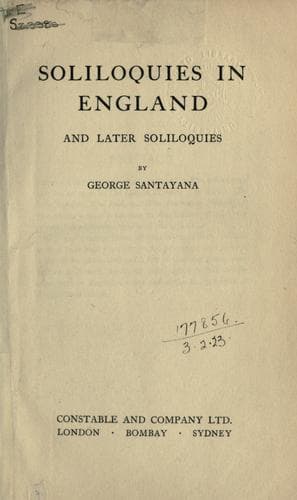
Soliloquies in England, and Later SoliloquiesSantayana, George
Philosophy
Soliloquies in England, and Later Soliloquies
Santayana, George
American essays -- 20th century
Larks made even Shelley envious, although no man ever had less
reason to envy them for their gift, either in its rapture or in its
abstraction. Even the outer circumstances of Shelley's life were very
favourable to inspiration and left him free to warble as much and as
ardently as he chose; but perhaps he was somewhat deceived by the
pathos of distance and fancied that in Nephelococcygia bad birds and
wicked traditions were less tyrannous than in parliamentary England.
He seems to have thought that human nature was not really made for
puddings and port wine and hunting and elections, nor even for
rollicking at universities and reading Greek, but only for innocent
lyrical ecstasies and fiery convictions that nevertheless should
somehow not render people covetous or jealous or cruelly disposed,
nor constrain them to prevent any one from doing anything that any
one might choose to do. Perhaps in truth the cloisters of Oxford and
the streets of London are quite as propitious to the flights of which
human nature is really capable as English fields are to the flights of
larks; there is food in them for thought. But Shelley was impatient
of human nature; he was horrified to find that society is a web of
merciless ambitions and jealousies, mitigated by a quite subsidiary
kindness; he forgot that human life is precarious and that its only
weapon against circumstances, and against rival men, is intelligent
action, intelligent war. The case is not otherwise with larks, on the
fundamental earthly side of their existence; yet because their flight
is bodily, because it is a festive outpouring of animal vitality, not
of art or reflection, it suggests to us a total freedom of the inner
man, a freedom which is impossible.
Public-domain text, read in full here on John Shaqi.
Reviews
Reviews
No reviews yet
Be the first to share your thoughts on this work.
Elsewhere in the archive
Join the Discussion
Join the discussion
Sign in to leave a comment or review.
Sign InorCreate an account