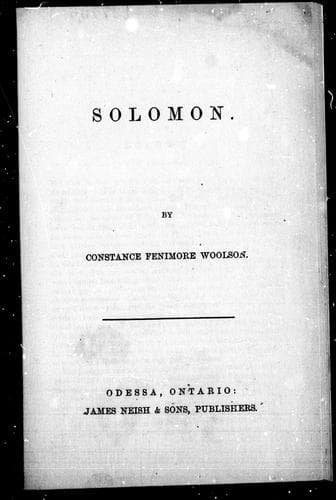
American fiction -- 19th century; Short stories, American
Beyond the palace began the Community garden, a large square in the
centre of the village filled with flowers and fruit adorned with arbors
and cedar-trees clipped in the form of birds, and enriched with an
old-style greenhouse whose sliding glasses were viewed with admiration
by the visitors of thirty years ago, who sent their choice plants
thither from far and near to be tended through the long, cold
lake-country winters. The garden, the cedars, and the greenhouse were
all antiquated, but to me none the less charming. The spring that gushed
up in one corner, the old-fashioned flowers in their box-bordered beds,
larkspur, lady slippers, bachelor's buttons, peonies, aromatic pinks,
and all varieties of roses, the arbors with red honeysuckle overhead and
tan bark under foot, were all delightful; and I knew, also, that I
should find the gardener's daughter at her never-ending task of weeding.
This time it was the strawberry bed. 'I have come to sit in your
pleasant garden, Mina,' I said, taking a seat on a shaded bench near the
bending figure.
'So?' said Wilhelmina in long-drawn interrogation, glancing up shyly
with a smile. She was a child of the sun, this little maiden, and while
her blond companions wore always their bonnets or broad-brimmed hats
over their precise caps, Wilhelmina, as now, constantly discarded these
coverings and sat in the sun basking like a bird of the tropics. In
truth, it did not redden her; she was one of those whose coloring comes
not from without, but within.
'Do you like this work, Mina?'
'O--so. Good as any.'
'Do you like work?'
'Folks must work.' This was, said gravely, as part of the Community
creed.
'Wouldn't you like to go with me to the city?'
'No; I's better here.'
'But you can see the great world, Mina. You need not work, I will take
care of you. You shall have pretty dresses; wouldn't you like that?' I
asked, curious to discover the secret of the Separatist indifference to
everything outside.
'Nein,' answered the little maiden, tranquilly; 'nein, fräulein. Ich bin
zufrieden.'
Those three words were the key. 'I am contented.' So were they taught
from childhood, and--I was about to say--they knew no better; but, after
all, is there anything better to know?
Public-domain text, read in full here on John Shaqi.
Reviews
Reviews
No reviews yet
Be the first to share your thoughts on this work.
Join the Discussion
Join the discussion
Sign in to leave a comment or review.
Sign InorCreate an account